
Express lab on a combine: Crop Control assesses grain every 6–8 seconds
XORit Editorial · Sources, AI assistance and corrections
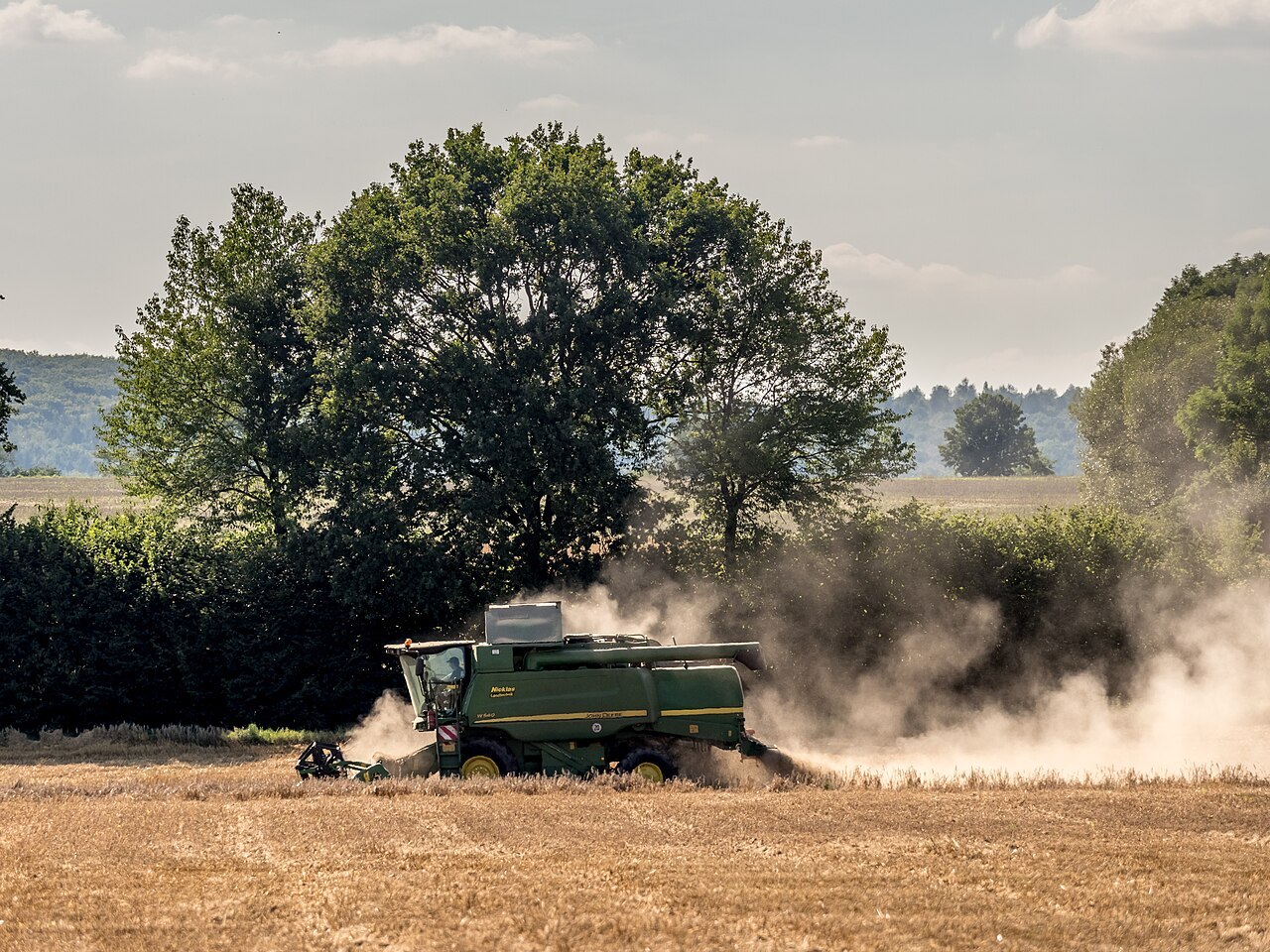
During harvest, it is usually possible to tell how well a combine has cleaned the grain only after reaping — at the elevator or in a lab, when nothing can be done to change the result. The Crop Control system from the team behind the Cognitive Pilot project is installed directly on the combine, even if it previously had no automation at all, and lets you monitor the quality and quantity of grain on the move.
How the system works
The quality assessment module is mounted on the grain elevator. Two holes are made in it, through which a sample is taken from the flow after cleaning roughly once every 6–8 seconds, analyzed and returned. A separate sensor tracks the bin level, another unit estimates the volume of grain on the elevator paddles, and a navigation block is part of some configurations.
On the screen the operator sees grain moisture and temperature, broken grain, trash content, bin level and a photo image of the sample in three modes: normal, with grains highlighted, and with broken grains and impurities shown. Moisture is calculated by the capacitance method with a correction for the crop, while a neural network trained separately for each crop recognizes broken grain and trash content. Short setup hints are displayed alongside, and an update every 6–8 seconds shows whether the adjustment helped.
The computations run on a separate computer inside the module so as not to take resources away from the autopilot. Telemetry goes to a server, where the agronomist sees heat maps of yield and trash content broken down every 10–20 meters; they are compared with soil maps for differentiated fertilizer application.
Engineering challenges
The author compares the solution with John Deere's Grain Sense system, where a camera is pressed against the elevator: that option requires a powerful computer and does not always provide close contact between the grain and the glass. Crop Control physically extracts a whole sample, taking all parameters from a single grain at one point. The hardest part turned out to be protecting the sampler from clogging: the work took about four years, and the mechanical agitator was replaced with a rotor with rubber paddles.
Compatibility and plans
For installation, a flat platform without moving units nearby is needed between the hood and the grain elevator. Most Rostselmash and Gomselmash models and a substantial portion of Claas machinery are suitable, and installation takes from 8 to 16 hours. In early testing, the system showed the client increased soybean cracking, and 20 minutes after the settings were adjusted, whole soybeans appeared in the frame. The plans include trials in Brazil and South Africa, adaptation for sugarcane, and determination of protein content.
Image: Ermell CC BY-SA 4.0 · License

Translation editor: Салтанов А.
Source: habr.com ↗