
NASA Assembled a Calendar of the October Sky: Draconids, Orionids and the Hunter’s Moon
XORit Editorial · Sources, AI assistance and corrections
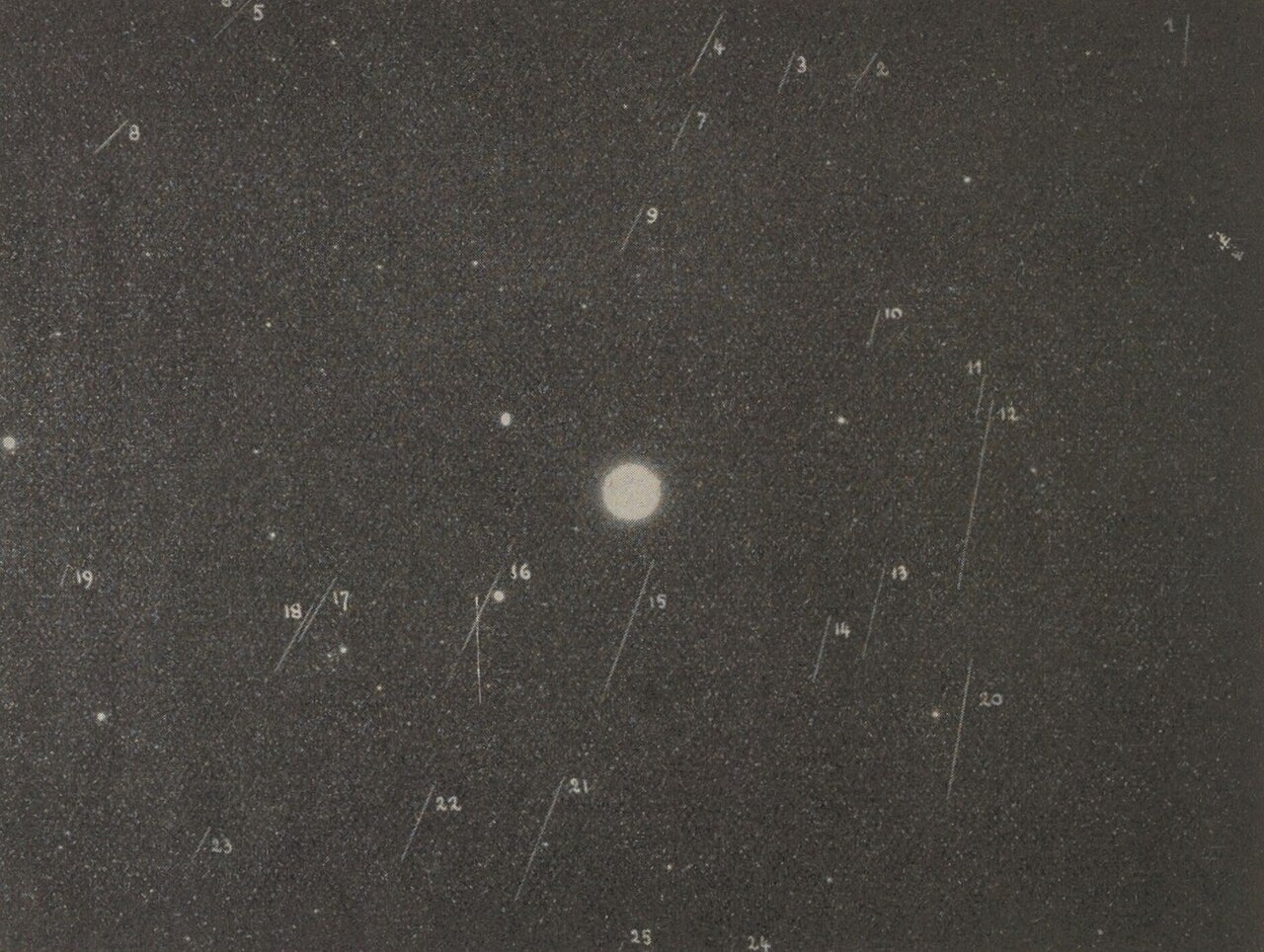
NASA has assembled a calendar of the best astronomical events of October. The selection includes a lunar occultation of Jupiter, two meteor showers and a full Moon. The Draconids peak on the night of October 8–9: the shower begins shortly after nightfall, and the nearly new Moon does not interfere with observations.
Lunar Occultation of Jupiter
The first entry in the calendar is a lunar occultation of Jupiter on the morning of October 6. The bright planet will briefly hide behind the thin crescent Moon and then reappear. It can be watched with the naked eye, and through binoculars you can make out how Jupiter's moons fade and return. The event will be seen best in North America.
The Draconids are not very intense: usually several meteors per hour are visible. The shower takes its name from the constellation Draco, from which the meteors appear to fly. They can be observed from any dark place, letting your eyes get used to the darkness, and the meteors will streak across the sky in different directions.
Orionids
On October 21 the Orionids will reach their peak. In the suburbs, where there is light pollution, roughly 3 to 6 meteors per hour are visible, and slightly more in darker places. This is dust left long ago by Halley's Comet: Earth passes through its trail, and the particles burn up in the atmosphere. The shower is named after the constellation Orion, where its radiant lies. This year the Moon in a phase close to full may interfere with observations: it will wash out some of the faint meteors. On the other hand, after the Moon sets at around three in the morning and the radiant rises higher, a good window opens before dawn.
Hunter's Moon
The full Moon will rise on October 26. By tradition it is called the Hunter's Moon: the name is linked to autumn hunting, when bright moonlight helped to track game. Before Halloween the Moon will still be shining, but already as a waning one, adding a soft glow to late October nights.
Image: Ferdinand Quénisset Public domain

Translation editor: Ловушкин А.
Source: www.nasa.gov ↗