
Cyrix MediaGX: the processor that fit almost an entire computer
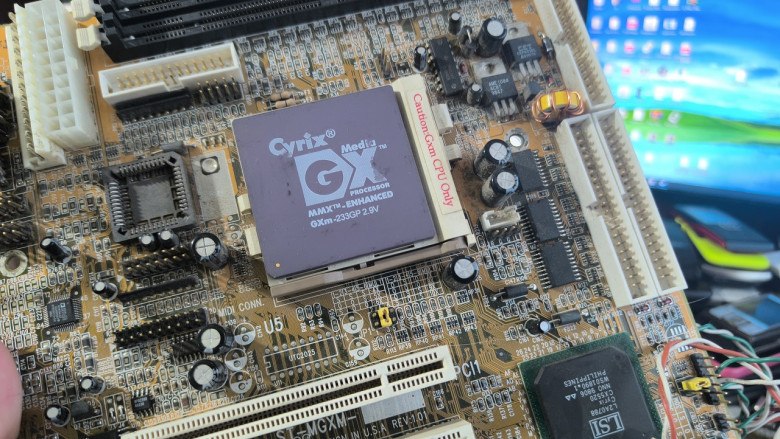
In 1997, Cyrix released the MediaGX processor, which became a notable experiment in integrating personal computer components. A single x86-compatible chip included the memory controller, a graphics core with VGA support, and a sound controller compatible with Sound Blaster.
MediaGX was based on the Cyrix 5×86 processor core. The initial models used a 0.4 µm manufacturing process, while later versions moved to 0.35 µm. Clock speeds ranged from 120 to 300 MHz depending on the variant.
The key feature of MediaGX was the virtual device subsystem. It emulated the presence of a VGA video adapter and a SoundBlaster audio adapter, intercepting all accesses to them through interrupts and processing them in system management mode (SMM) using subroutines recorded in the BIOS.
The processor found use in compact laptops and gaming consoles. Known systems based on it include CTX EzBook laptops, Compaq Presario desktop computers of the 1230, 2100, and 2200 series, Casio Cassiopeia FIVA MPC-2xx subnotebooks, and the Dover JavaStation workstation from Sun Microsystems.
MediaGX also had limitations. It did not support L2 cache even if it was installed on the motherboard, and it could only work with specially designed boards due to the tight integration of components. Additionally, the graphics, sound, and PCI subsystems ran at the processor frequency, which sometimes led to reduced overall performance.
After Cyrix was acquired by National Semiconductor, the MediaGX platform was renamed Geode and subsequently sold to AMD. The ideas behind MediaGX continued to develop in the line of energy-efficient processors for embedded systems and thin clients.
Primary source: ru.wikipedia.org ↗