
On This Day: Mathematician Paul Erdős Died 30 Years Ago
XORit Editorial · Sources, AI assistance and corrections
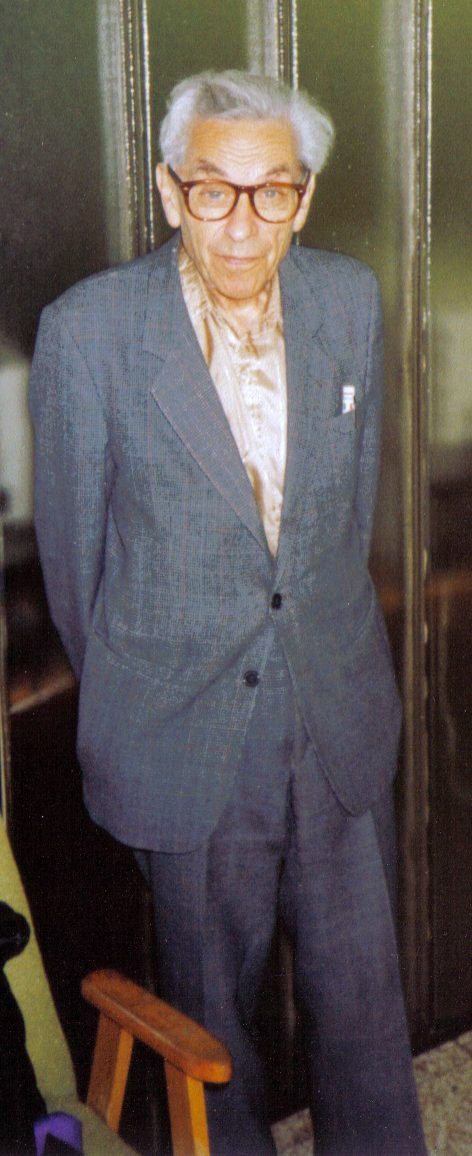
On 20 September 1996, Paul Erdős died in Warsaw during a mathematics conference — one of the most prolific mathematicians of the 20th century. He was 83, and death caught up with him almost exactly as he himself had once described it: at work, among problems and colleagues.
Erdős was born in 1913 in Budapest, into a family of mathematics teachers. He learned to read from the mathematics books kept at home, and he defended his doctorate at the age of 21.
Over his lifetime he published about 1,500 mathematical papers, writing them with more than 500 co-authors. Out of that habit of working together grew the "Erdős number" — the length of the shortest chain of co-authorship leading to him. Roughly 200,000 mathematicians have such a number in one form or another.
Erdős had no home: he spent most of his adult life with a suitcase, moving from university to university, asking his hosts for nothing more than a desk, a place to sleep and the chance to work. He saw mathematics as a collective endeavor, and summed up his nomadic motto simply: another roof, another proof.
His work in discrete mathematics, graph theory, number theory and Ramsey theory underlies modern algorithm analysis. In 1983/84 Erdős received the Wolf Prize — one of the top honors for mathematicians. He never won the Fields Medal, however: Erdős solved specific open problems rather than building new theories.
He is buried in Budapest, next to his parents. In 2021 the mathematician's name was given to a minor planet in the asteroid belt — so now there is also Erdőspál.
Image: Kmhkmh CC BY 3.0 · License

Translation editor: Ловушкин А.
Source: en.wikipedia.org ↗