
On this day: Torres y Quevedo’s ‘Telekino’ and a boat with no crew on board
XORit Editorial · Sources, AI assistance and corrections
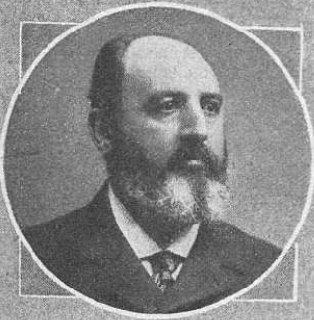
On 25 September 1906, in the port of Bilbao, the Spanish engineer Leonardo Torres y Quevedo carried out a demonstration of his 'Telekino.' From the shore he steered the boat 'Vizcaya,' which had people on board, and kept the link working at a distance of up to two kilometers. King Alfonso XIII watched the experiment.
The device's name was made up of the Greek words tele, 'far away,' and kino, 'movement.' The receiver distinguished the coded signals of ordinary wireless telegraphy and answered each one with its own action: turning the rudder, changing speed, switching on a light, raising a flag. In all, the prototypes could read up to nineteen different commands.
Torres began working on the system around 1901–1902, so that he could test his own airships without risking people's lives. In 1902–1903 he patented it in France, Spain, the United States, and Great Britain, and in August 1903 he presented it to the Paris Academy of Sciences together with a detailed report.
The first experiments were more modest. In 1904, Torres steered an electric three-wheeled vehicle over a distance of 20–30 meters; this model is considered the first known radio-controlled ground vehicle. A year later he guided an electric boat across a pond in Madrid's Casa de Campo, by then from roughly 250 meters.
He wanted to use the 'Telekino' to guide underwater torpedoes and asked the Spanish government for funding, but was refused. With that, work on refining the system came to an end.
These very experiments were for Torres the starting point for his work on automata: later he built the chess automaton El Ajedrecista and designed computing machines, and today he is called one of the pioneers of computing and robotics. But the central principle became clear already in Bilbao: a mechanism receives commands at a distance and carries them out with no person on board. From this grew the principles of modern wireless remote control, on which radio-controlled models, drones, and the first steps of robotics rest.
Image: Unknown author Unknown author Public domain

Translation editor: Ловушкин А.
Source: en.wikipedia.org ↗