
Hubble measures the winds of the most metal-poor massive stars
XORit Editorial · Sources, AI assistance and corrections
Astronomers at the University of Utah, led by Grace Telford, have presented the results of the TEMPOS survey, the largest sample to date of massive stars with a very low content of heavy elements. The ultraviolet observations were made by the Hubble Space Telescope with the COS spectrograph. The survey was published on 21 September 2026 in The Astrophysical Journal Supplement Series.
Massive stars heavier than ten solar masses live short lives, but they largely shape the appearance of their galaxies. They shine brightly, lose material in a stellar wind, and end their lives in a supernova explosion, heating and regulating the gas from which new stars form. Such stars cannot be resolved in the first galaxies, so TEMPOS chose the nearest analogue: six dwarf galaxies with a metallicity below one-fifth of the Sun's.
The sample includes 29 stars, 12 of which were observed anew, while the remaining data were combined with them into a single homogeneous set. Each star requires up to 35 hours of Hubble time. The general trend was confirmed: the fewer the metals, the slower the wind. But in the most metal-poor stars, below about 10% of the solar abundance, the wind speed drops sharply, more strongly than would follow from observations of stars with an ordinary composition.
A weak wind means less mass loss: the star retains more of its original material and therefore evolves differently, ends its life differently and affects the gas around it differently. This may explain the strange properties of early galaxies seen by Webb: models of massive stars for those eras were built almost blind.
Iron is key in this physics: it drives the stellar wind, sets the course of evolution and triggers the supernova. Measuring it in metal-poor environments is difficult, so metallicity is usually estimated from oxygen. The team measured weak iron absorption lines in the ultraviolet spectra and found that the iron content of these stars varies widely.
The authors are already combining the Hubble data with observations from the Keck Observatory in Hawaii to estimate the chemical composition and mass loss more precisely. The finished TEMPOS ultraviolet spectra will be posted in the open MAST archive.
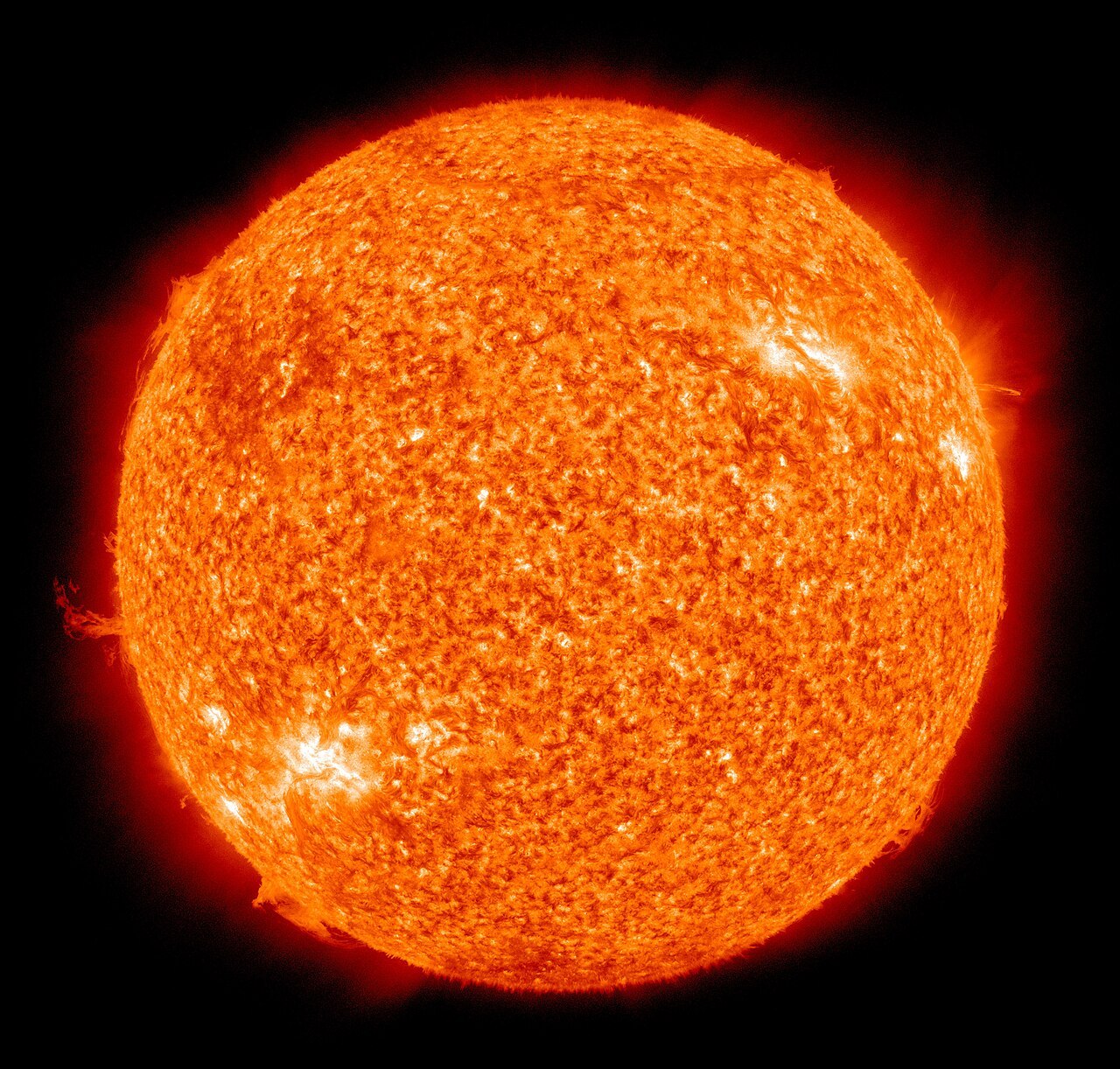
Image: NASA/SDO (AIA) Public domain

Translation editor: Ловушкин А.
Source: attheu.utah.edu ↗