
On This Day: The First Ethernet Specification Is Published
XORit Editorial · Sources, AI assistance and corrections
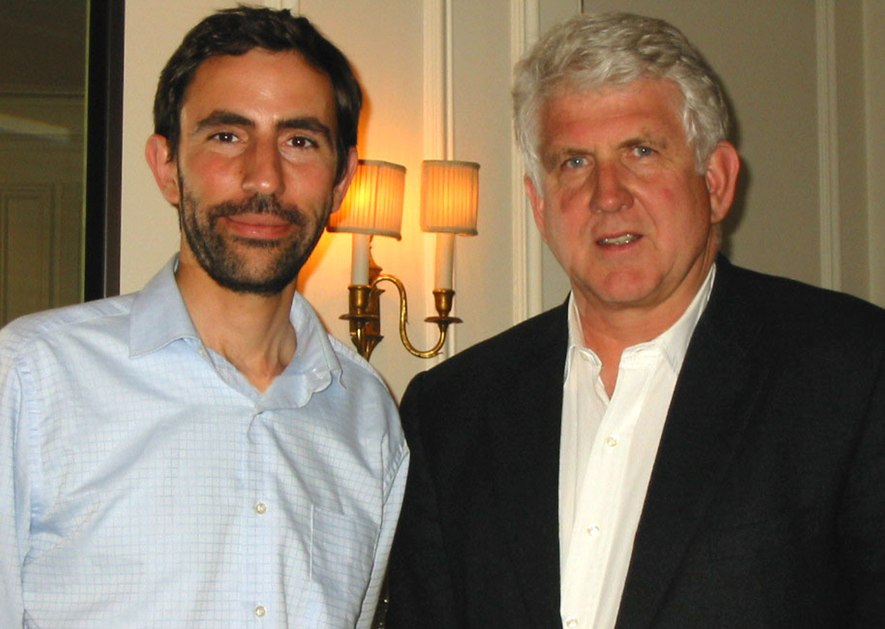
On September 30, 1980, DEC, Intel and Xerox released the first Ethernet specification, a common standard for local area networks.
History
The work on the technology took place at the Xerox PARC research center. Its employee Robert Metcalfe described the potential of the new network in a memo dated May 22, 1973, and in 1976, together with his assistant David Boggs, published a booklet on packet transmission in local networks. In 1979 Metcalfe left Xerox, founded the company 3Com to promote the technology, and persuaded DEC, Intel and Xerox to prepare a joint document.
Technology
The early versions of the standard described transmission over coaxial cable; later it became possible to use twisted pair and optical fiber. Twisted pair has its own advantages: duplex mode, inexpensive cable, resistance to interference, a star topology in which a broken cable disrupts communication only between two devices, and power for low-power nodes over the same cable.
In the early versions, access to the medium was governed by the CSMA/CD method, the transmission rate was 10 Mbit/s, and the frame size ranged from 64 to 1518 bytes. Ethernet had strong rivals, the patented Token Ring and ARCNET, but the market chose Ethernet, and 3Com became one of the leading companies in the industry.
By the mid-1990s Ethernet had become one of the most widespread local network technologies, displacing Token Ring, FDDI and ARCNET. In 1995 the Fast Ethernet standard at 100 Mbit/s with full duplex was adopted, in 1997 Gigabit Ethernet at 1000 Mbit/s, first for optical fiber and two years later for twisted pair as well. Today Ethernet is described by the IEEE 802.3 group of standards, and it is hard to imagine wired networks without it.
Image: Andreu Veà, WiWiW.org CC BY-SA 3.0 · License

Translation editors: Соловьев В., Пеков А.
Source: ru.wikipedia.org ↗