
Yandex unveils Sona recommendation model
XORit Editorial · Sources, AI assistance and corrections
Updated:
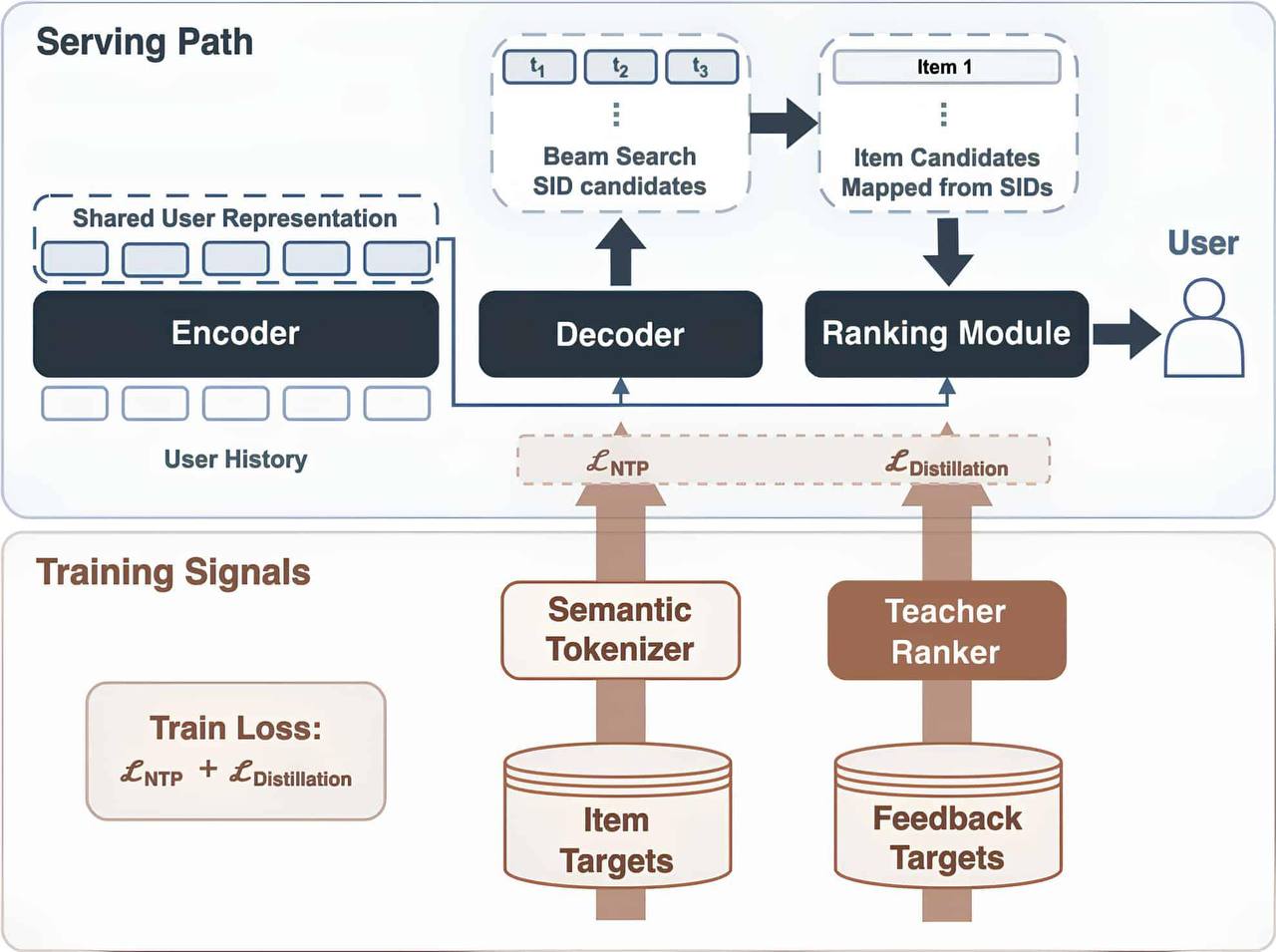
Yandex unveiled Sona, a generative recommendation model. The company announced the development on October 1, 2026. The model selects suitable options itself and puts them in the right order; it does not need manual feature engineering.
Usually such systems are built as a pipeline: some algorithms look for suitable options among millions, while others pick the best ones and arrange them in order. Each algorithm has to be trained separately, and the features it scores options by have to be set by hand. Sona takes on that work: it looks at a person's actions — what they chose, what they rejected and what they came back to — and decides straight away what will suit them.
Put to the test with music in speakers
The first service used for the test was music recommendations in smart speakers with Alice. For a week, Sona replaced the system running there, which includes dozens of algorithms: each proposes a suitable track, and the system picks the best one in several stages.
In the test group, listening time for recommended tracks rose by 6.3%, and requests to repeat a track increased by almost 18%. The audience of active listeners grew by 4.5%, which is 2.4 times more than after the previous update. The team shared the results in a research paper on the arxiv.org platform.
The model was built by engineers from Alice, Yandex Music and the R&D team. The company has been working on recommendation systems for more than ten years. In 2025, it introduced the ARGUS system based on transformers into its services, and in 2026 the Gryphon architecture appeared there, combining part of the selection stages. Sona continues this line of work, in which only a few companies worldwide have succeeded so far.
Yandex also shares its work with researchers separately: in 2025 the company open-sourced the Yambda dataset to advance recommendations. As for practice, so far it is only about music in smart speakers, and the conclusions rest on a one-week test. For a listener this means more accurate selections, but the experiment did not affect other services.
Translation editor: Салтанов А.
Source: yandex.ru ↗