
IceCube Creator Francis Halzen Wins the 2026 Nobel Prize in Physics
XORit Editorial · Sources, AI assistance and corrections
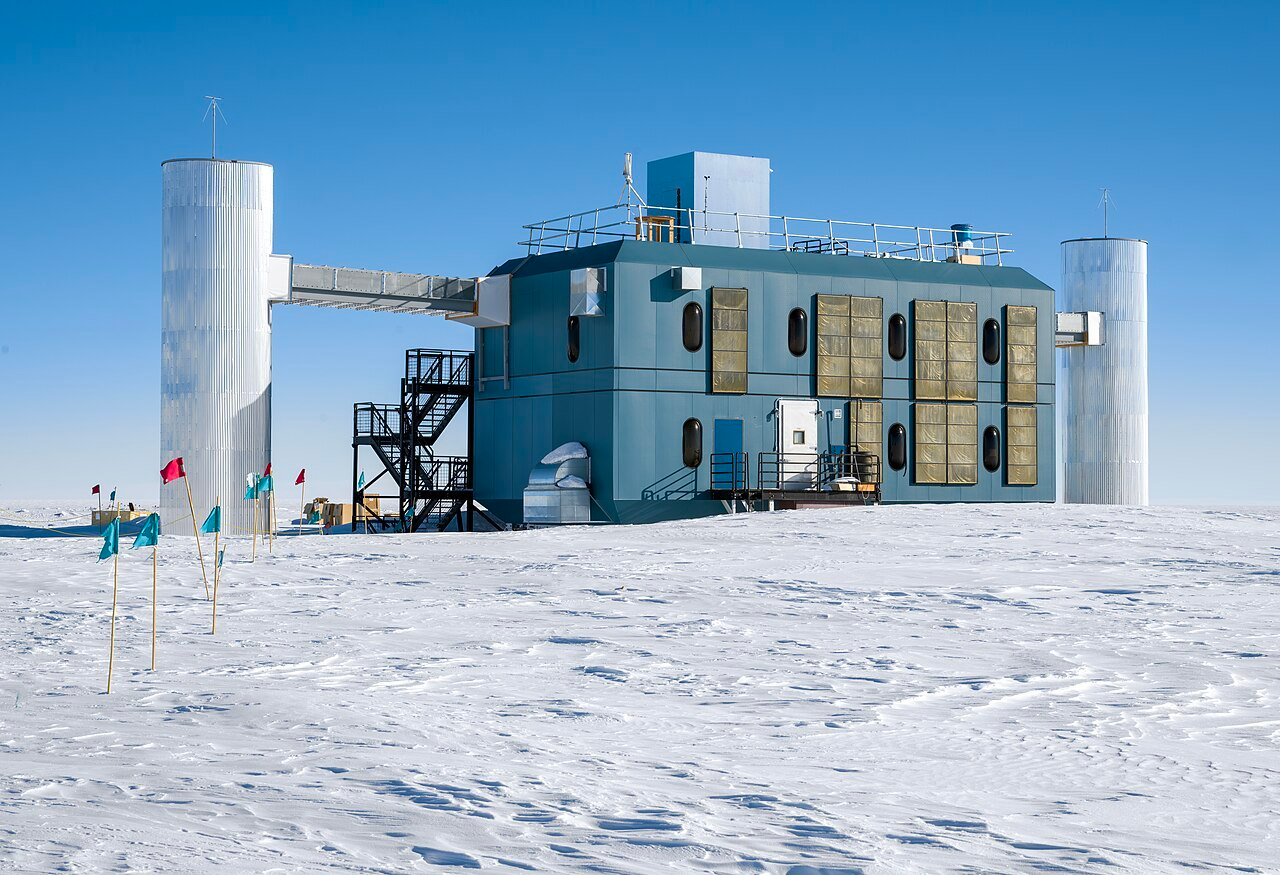
On 6 October 2026, the Royal Swedish Academy of Sciences announced that the Nobel Prize in Physics had been awarded to Francis Halzen of the University of Wisconsin–Madison. The prize was given for his decisive contribution to the creation of the IceCube neutrino observatory at the South Pole and for the discovery of high-energy neutrinos of astrophysical origin.
Halzen was born in 1944 in Tienen, Belgium, defended his dissertation at the Catholic University of Leuven in 1969, and works as a professor at the University of Wisconsin–Madison. He put forward the idea of catching neutrinos in the ice of the South Pole back in 1988, and a few years later researchers who supported it carried out the first tests of sensors in the ice.
How Ice Became a Detector
The scheme works like this: a neutrino occasionally collides with an atomic nucleus and produces a flash of light, which sensors in the transparent ice mass pick up. Antarctic ice is convenient because it contains few disturbances, and the area is geologically stable — there are no earthquakes there. The IceCube detector occupies a whole cubic kilometre, and its construction was completed in 2011.
Soon after that, researchers detected the first high-energy neutrinos, and a few years later they were able to report particles that had clearly come from beyond the Solar System. From that moment, a genuine search for the sources of neutrinos in the Universe began.
Neutrinos hardly interact with matter and pass through the Earth and our bodies unnoticed. Yet from distant corners of space they do arrive, without changing direction or losing energy. Cosmic particle accelerators drive particles to energies a million times greater than those achievable in laboratories on Earth, and neutrinos yield information about them that cannot be obtained in any other way. The chairman of the Nobel Committee for Physics, Mark Pearce, noted Halzen's persistence and scientific intuition, thanks to which a new kind of astronomy came into being.
The prize sum is 12 million Swedish kronor. The stream of neutrino events that IceCube collects continuously promises new data about the most turbulent processes in the Universe and, possibly, about cosmic phenomena that are still unknown.
Image: Christopher Michel CC BY-SA 4.0 · License

Translation editor: Ловушкин А.
Source: www.nobelprize.org ↗