
Receptor that drives brain inflammation found in Birmingham
XORit Editorial · Sources, AI assistance and corrections
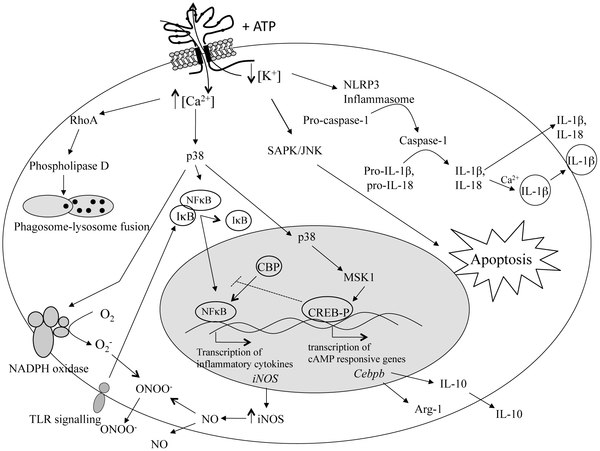
Scientists at the University of Birmingham led by Professor Nicholas Barnes have identified the P2X7 receptor, blocking which suppresses neuroinflammation. The university announced this on 5 October 2026; the results were published in the journal Brain. This is the first study of its kind carried out on human brain tissue.
P2X7 is responsible for triggering inflammatory signalling and for the release of cytokines, the proteins that control inflammation. When the researchers blocked the receptor with a specific antagonist, the inflammatory response in human brain tissue fell noticeably.
The work was done not only with living cultures of brain cells but also with tissue slices obtained during neurosurgical operations. Separately, the researchers turned monocytes from blood samples into microglia, the cells that coordinate the immune response in the brain. Outside their usual environment microglia quickly lose their properties, so this approach provided a more convenient and scalable model for studying them.
The authors list where such an approach could be useful: traumatic brain injury, neurodegenerative diseases such as Alzheimer's and Parkinson's diseases and multiple sclerosis, and also psychiatric disorders including schizophrenia, psychosis and depression, in which inflammation is also thought to play a part. The idea is to make use of drugs that already exist.
The next stage of the work, according to Barnes, is clinical trials involving patients with neurodegenerative diseases and traumatic brain injuries, for which there is still no effective drug therapy that reduces neuroinflammation and the damage it causes. The professor called the finding a step towards tackling neuroinflammation at its source.
Image: PLOS Pathogens CC BY 3.0 · License

Translation editor: Ловушкин А.
Source: www.birmingham.ac.uk ↗