
A toothbrush generates electricity while brushing and kills bacteria
XORit Editorial · Sources, AI assistance and corrections
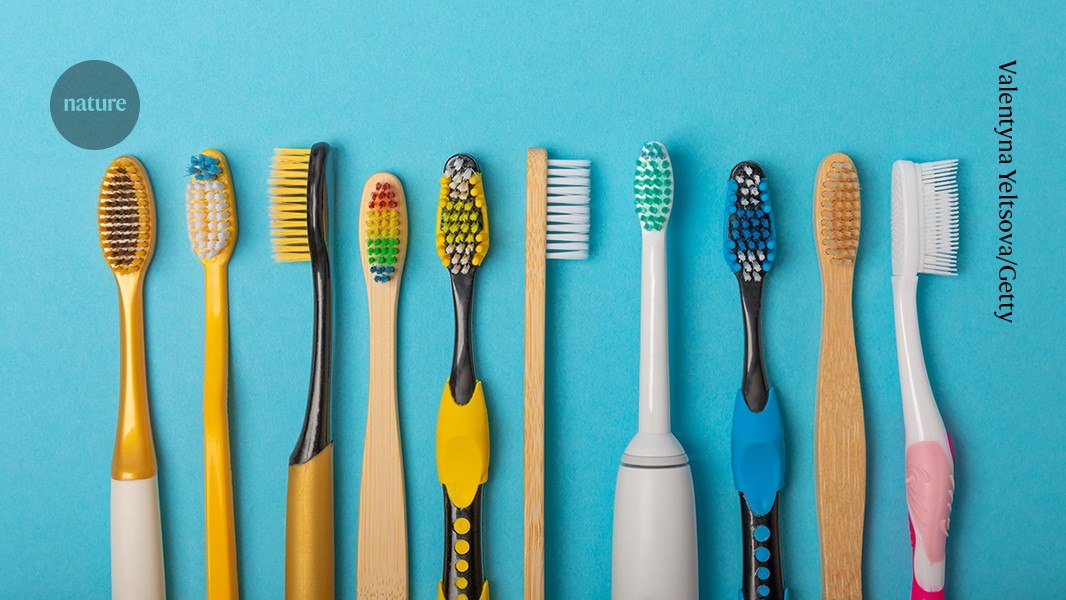
Researchers at Peking University in Beijing have made a toothbrush without a battery. It generates its own electric charge when the bristles bend during brushing, and in this way destroys bacteria. The work was published in Science Advances on November 4. Nature describes the invention as a possible first radical redesign of the manual brush in more than a thousand years.
The bristles are made of polyvinylidene fluoride. The polymer was stretched and heated to obtain its piezoelectric form: when deformed, the material produces a charge. When the teeth are brushed, the bending bristles create reactive oxygen species in the saliva near them. These damage the membranes of bacterial cells. When the bristles straighten, the material takes the charge back.
Ordinary bristle brushes, which people have used to clean their teeth since the 10th century, rely mainly on motion: it mechanically disrupts plaque, the saliva film in which bacterial colonies grow. The history of the brush traces back to the Tang dynasty in China. The new variant adds electrical and chemical action to the mechanical one.
In tests, the brush did not damage the tooth surface and was not toxic to human cells. The authors did not study long-term safety or cost, so the invention is still far from mass production and a place on the bathroom shelf.
Periodontist and microbiologist Frank Scannapieco of the University at Buffalo in New York called generating electricity from brushing a new twist on an old idea. According to him, the brush may reduce the amount of plaque more effectively, but additional tests are needed to prove its efficacy and safety.
Translation editor: Ловушкин А.
Source: www.nature.com ↗