
Gravity instead of radio: a message through a brick wall
XORit Editorial · Sources, AI assistance and corrections
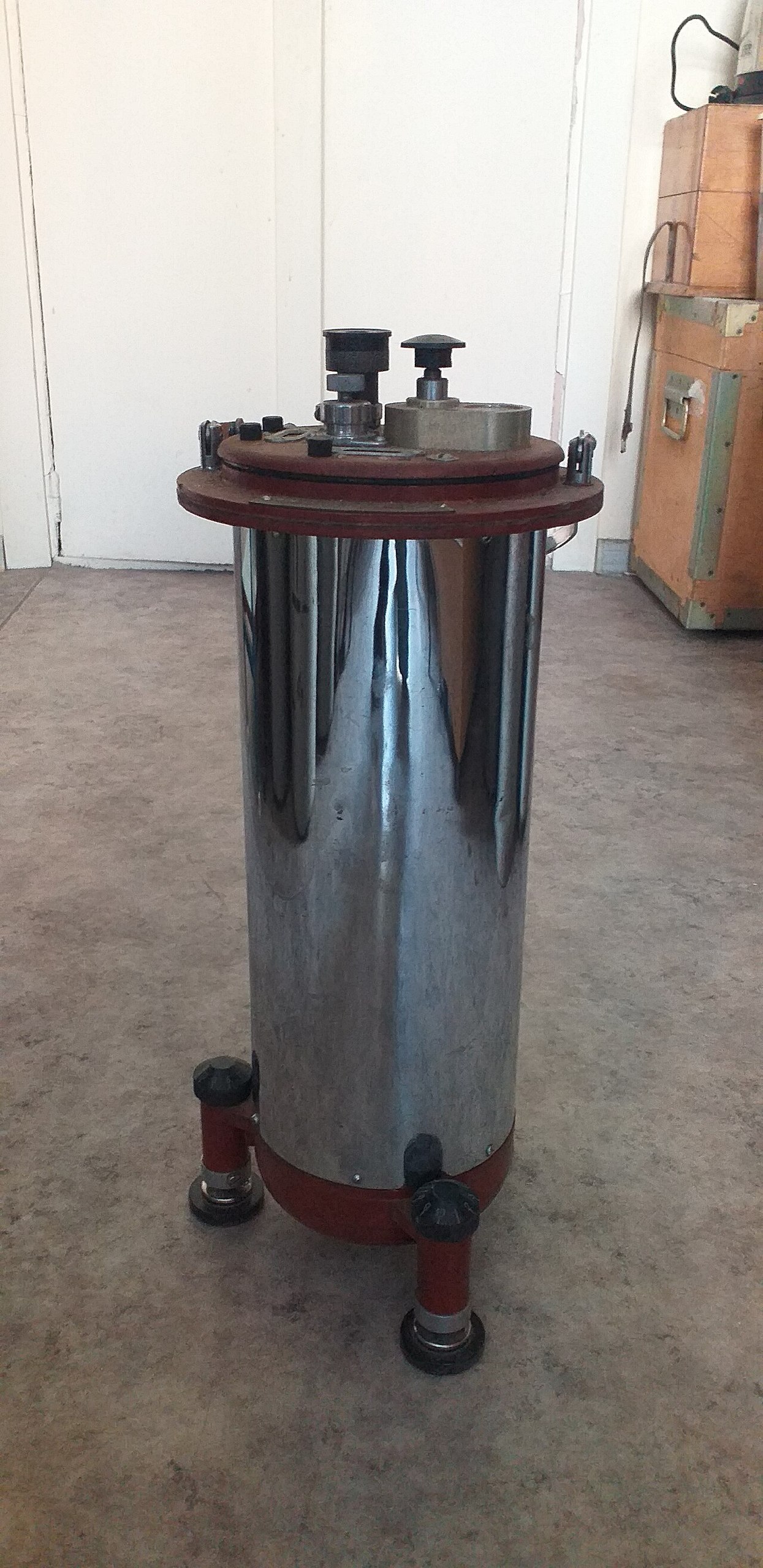
Physicists at the University of Queensland transmitted a message through a brick wall using gravity. The experiment took place in the Parnell building, and the university reported it on 19 November 2026. An elevator traveled between two floors, and its 1.8-tonne counterweight took positions encoding binary 0 and 1. A gravimeter in the neighboring bathroom registered changes in the gravitational field and in the end received a single word: “Gravity”.
The appeal of such a channel is that a gravitational signal cannot be shielded by placing ordinary material in its path. Доктор Воффинден from the School of Mathematics and Physics compares this to a situation familiar to anyone who has lost signal in a tunnel or struggled with Wi-Fi through a solid wall. The current system is far from practical use, but it shows the very possibility of communication that physical obstacles do not block.
The idea grew out of a contactless weighing project: the team wanted to determine the mass of trucks and other large vehicles from their weak gravitational attraction. When it became clear that the measurement worked, the physicists realized that the same physics makes it possible to encode and transmit information, доктор Грошек said.
The main limitation now is speed. The 1950s elevator moved very slowly, so the experiment transmitted one bit per minute, and a single word took a whole hour. According to one of the authors, the speed depends on the mass, how quickly it is moved, and the sensitivity of the detector. He also recalled that more than a hundred years passed from the first telegraph system to the mobile phone.
In an article in Science Advances, the authors note that the system is far from practical application. Their modeling shows that quantum sensors, under rather bold assumptions, could provide a range of up to 500 meters and a speed of about 15 bits per minute. In the future, such sensors would be useful in places where radio waves, light and other ordinary signals do not reach.
Image: VickRomanoff CC BY-SA 4.0 · License

Translation editor: Ловушкин А.
Source: news.uq.edu.au ↗