
Voyager 1 Is Expected to Reach One Light Day from Earth
XORit Editorial · Sources, AI assistance and corrections
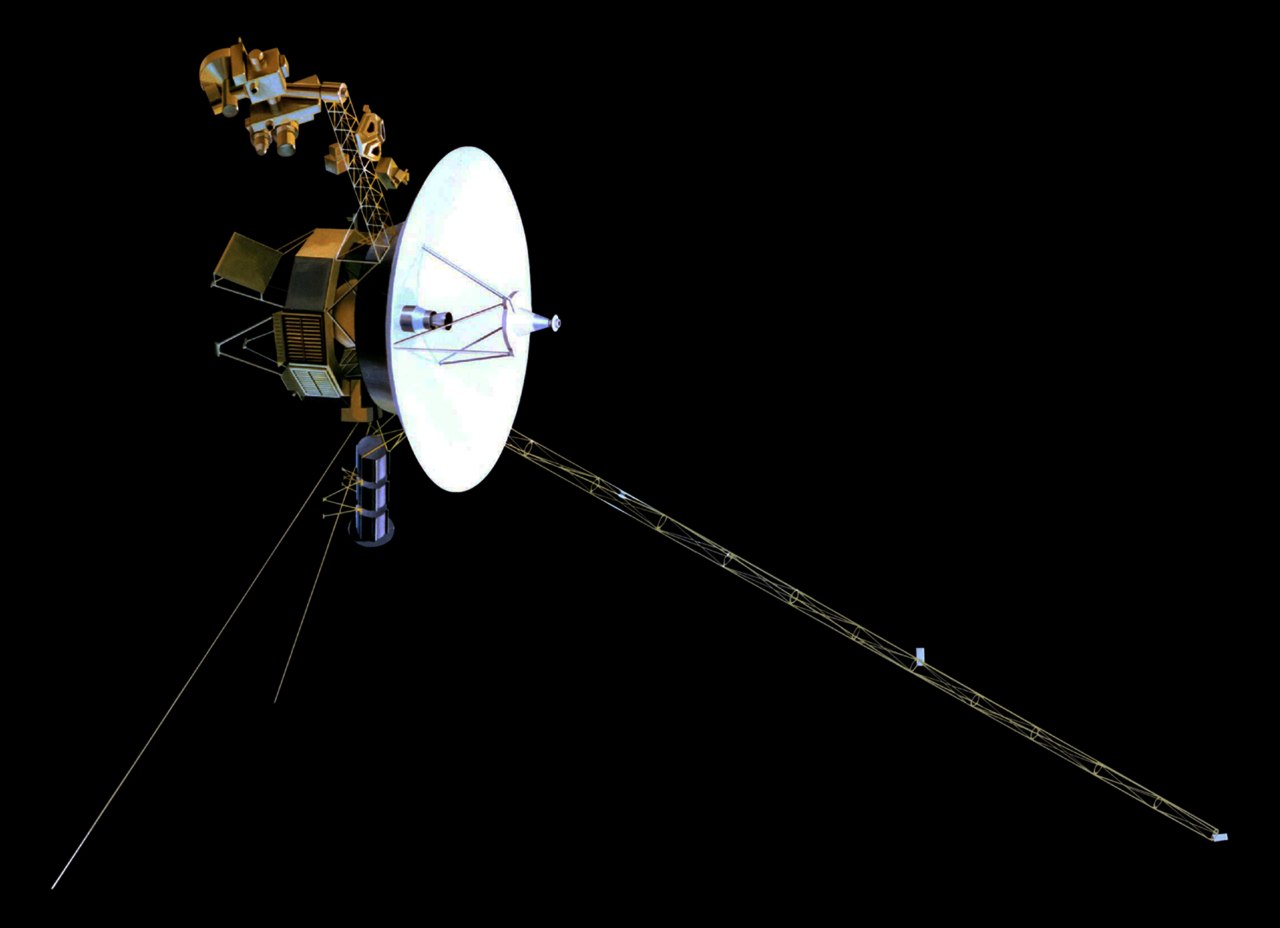
According to calculations by NASA and the Jet Propulsion Laboratory, on November 18, 2026, Voyager 1 should reach a distance of one light day from Earth. That is about 25.9 billion km, or 173 astronomical units. A light day equals the distance light travels in 24 hours, so a one-way signal from the spacecraft takes about a day.
Voyager 1 was launched on September 5, 1977. It remains the most distant human-made object from Earth: as of November 2026, the spacecraft is at a distance of 173.02 astronomical units, about 25.9 billion km. As of 2025, its signals took more than 23 hours to reach Earth.
The spacecraft moves relative to the Sun at about 61,000 km/h, roughly 3.57 astronomical units per year. In 1979 it flew past Jupiter, and in 1980 past Saturn. During these flybys Voyager 1 studied the planets' atmospheres, magnetic fields and rings, and transmitted the first detailed images of their moons.
In August 2012 Voyager 1 crossed the heliopause and entered interstellar space. It became the first spacecraft to do so. As of 2026, two science instruments are operating on it: the plasma wave instrument and the magnetometer.
In September 2026 the mission team carried out an energy-saving operation called "Big Bang." Three devices were switched off and replaced with less power-consuming solutions. The operation was successful and is expected to extend the spacecraft's service life. On October 18 and 19, the signal from Voyager 1 was lost for 48 hours, but the connection restored itself, without intervention from Earth.
The spacecraft's radioisotope thermoelectric generators can supply it with energy for transmitting engineering data until 2036. By the same time, Voyager 1 is estimated to be outside the reception range of NASA's Deep Space Network.
Translation editor: Ловушкин А.
Source: en.wikipedia.org ↗