
ChatGPT shrunk to a Super Nintendo cartridge: 2.2M parameters and 4 MB
XORit Editorial · Sources, AI assistance and corrections
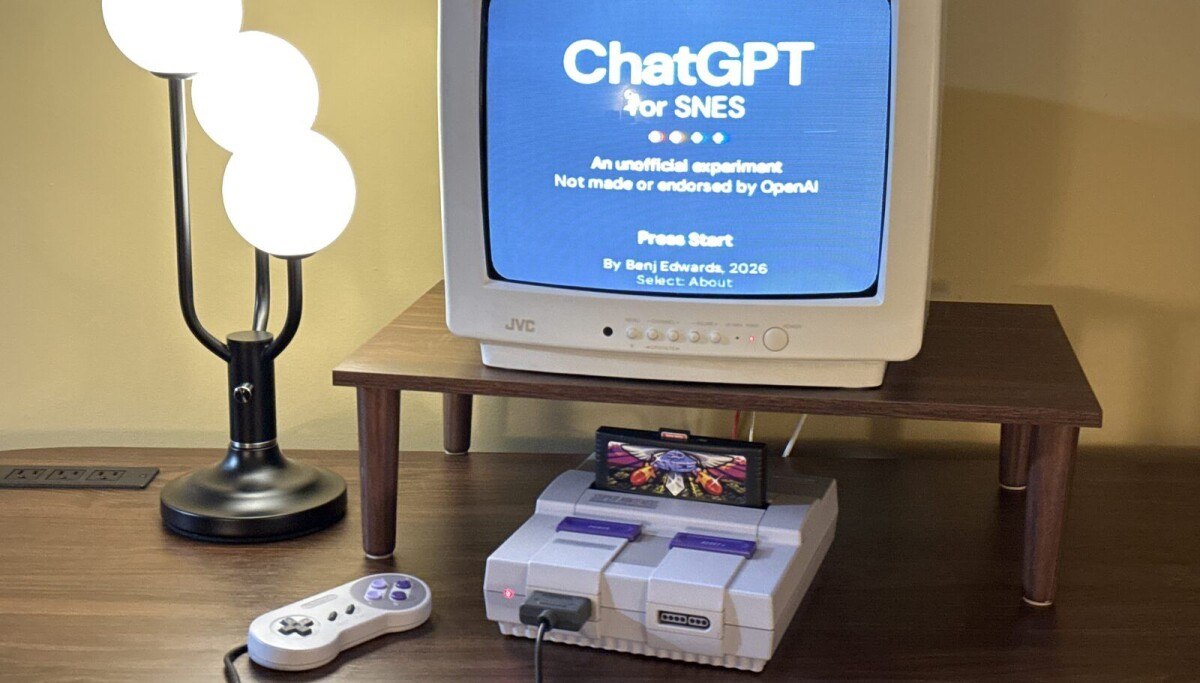
On 21 November 2026, a project called ChatGPT for SNES appeared online: a tech journalist and retro-hardware enthusiast, the author of this undertaking, built a tiny version of the chatbot that runs on a Super Nintendo cartridge. It can be launched in a browser emulator, with sound effects and music of the SNES era, and the ROM itself is available for download.
The model turned out modest: 2.2 million parameters, a distillation of the open GPT-OSS-120b, on which the training dialogues were built. The vocabulary is about 8,000 words, and the base version takes up roughly 4 MB.
The second version carries a factual base compiled from the first sentences of about 150,000 Simple English Wikipedia articles. It weighs 19 MB. If you ask both versions the same questions, the difference in the answers is immediately noticeable.
Сам автор warns honestly: this is not a useful assistant. The model is millions of times smaller than those behind ChatGPT and often makes mistakes, sometimes confidently. The factual base may also contain errors.
What you need to run it
To run it on a real console you will need a cartridge that supports custom ROMs and the Super FX chip, for example the FXPak Pro or SD2SNES. The versions with the factual base additionally need MSU-1, an aftermarket module that adds capabilities like CD-ROM to the SNES. The clean version, according to автора, could theoretically be written to a homemade cartridge, and it does not require Super FX, but without the additional computing resource the answers are worse.
The project's code was written by AI agents. Автор has been interested in the topic since the 1990s and over the past year has been developing the idea of "tiny talking machines", using large models as assistants. Besides ChatGPT for SNES, he made a ROM for the NES called Séance: there an even smaller model portrays a conversation with a ghost in a game cartridge.
The agents that wrote the code believe that on limited hardware the model has already reached the limit of quality. Автор disagrees: in his opinion, new ideas from people are capable of getting around these limitations, and he is already working on improving the coherence of the answers.
Translation editor: Салтанов А.
Source: www.theregister.com ↗