
OpenAI models improved blocks of AMD’s flagship GPU by up to 14% on PPA
XORit Editorial · Sources, AI assistance and corrections
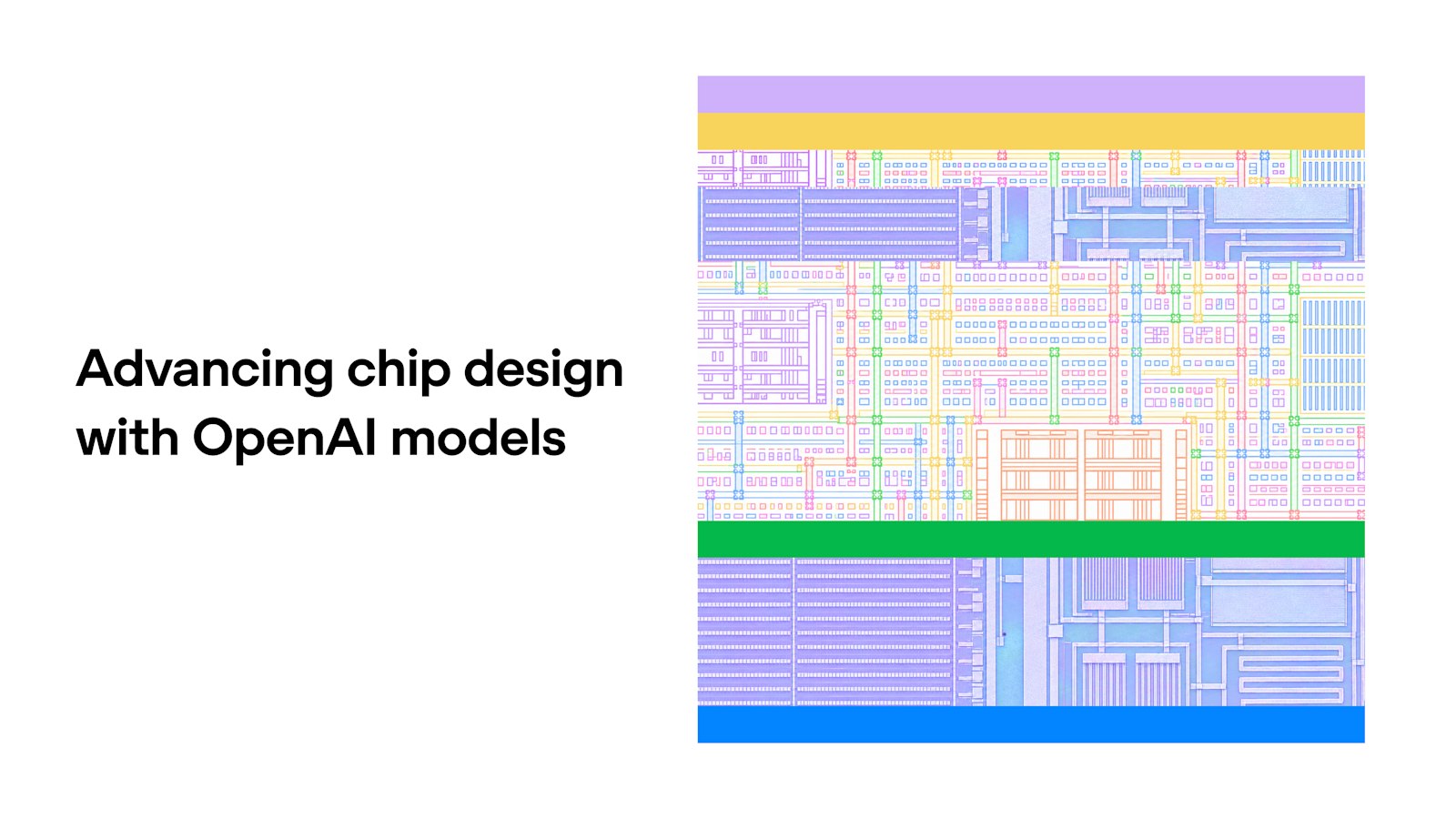
On November 18, 2026, OpenAI said its models improved blocks of AMD's flagship GPU IP: by the company's estimate, the PPA (power, performance, area) gain reaches 14% relative to already heavily optimized baseline versions. This concerns rewriting SystemVerilog RTL, the code that describes chip circuits. The models proposed changes in circuits that perform computations, control operations and data movement.
Each edit was checked with Synopsys tools: it was necessary to make sure the block's behavior was preserved and to evaluate the trade-off between power, performance and area. AMD has already included some of the changes in the design sent to manufacturing, and added the rest to production files for future versions. By OpenAI's estimate, this is about a year of progress in less than five months.
Jalapeño: edits verified on silicon
On its first inference chip, Jalapeño, the company used models with GPT-o3 mini back in early 2025. In the vector block, the savings came from floating-point addition and multiplication units, conversion functions, reduction logic and the special functions block. One reworked multiplier took about 15% less standard-cell area at synthesis, and its latency dropped from two cycles to one. A separate adder also lost about 15% of area while keeping two-cycle latency. Across the project, the team estimates a reduction in standard-cell area of about 13% in the vector block and 10% in the matrix block; these optimizations were confirmed on silicon during the Jalapeño launch.
On the processor side, AMD verified single-digit percentage PPA improvements in key blocks of its future next-generation flagship CPU designed by the OpenAI model. The company expects further PPA growth on top of already optimized GPUs and CPUs.
Experiments with RISC-V cores
To measure progress between model generations, they were tested on two open 32-bit RISC-V cores: PicoRV32 for reconfigurable FPGA chips and Ibex, an embedded processor in the OpenTitan security chip. The model received the initial hardware description and had to increase throughput, that is, the number of instructions per second. Results were checked in simulation: the design got zero if it failed verification or if its area was more than 16 times that of the original core. Passing variants were scored by instructions per cycle on workloads hidden from the models and multiplied by the maximum frequency estimated by Yosys. With a comparable budget of about 112,000 tokens per run, the best average result on both cores was shown by GPT-6.2 Astra: on PicoRV32 its score is about twice that of GPT-6 Astra. In total, the evaluation included 9,881 counted runs.
The second task proposed designing a core from written requirements and system connection templates. With the same token budget, all five models performed better than when refining an existing design, on both PicoRV32 and Ibex. OpenAI notes that starting from a specification allows omitting some functions of the original cores, such as performance counters and additional instructions, and this may partially explain the advantage. The company calls the test with a mandatory feature set, a hard area limit and timing checks after physical synthesis more representative of real design.
Next, OpenAI plans to train the GPT-Synopsys model together with Synopsys to work with electronic design automation tools the way experienced engineers do.
Translation editor: Салтанов А.
Source: openai.com ↗