
Taylor Swift became a genus of bugs: scientists named new insects in her honor
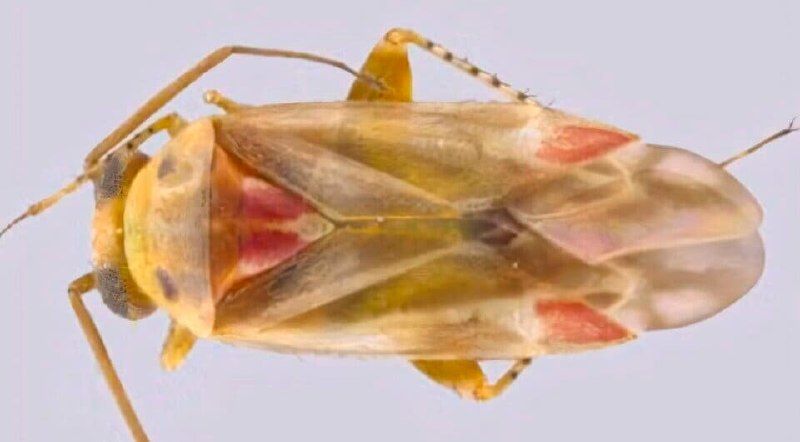
A group of scientists led by Sarah Schroeder, a graduate student at the University of California, Riverside, has described a new genus of insects in the plant bug family (Miridae) and named it Swiftiephylus. The genus includes four species living on Australian casuarinas – trees and shrubs adapted to different conditions, from tropical forests to coastal dunes and extreme heat. The work was published on September 9, 2026, in the journal Insect Systematics and Evolution.
The specific epithets reference the singer’s work: Swiftiephylus taylorae is named after Taylor Swift herself, and the names of the other three species — amator, intrepidus, and poetorum — are Latin translations of the words ‘lover’, ‘fearless’, and ‘poets’. They correspond to the albums Lover, Fearless, and The Tortured Poets Department. The genus name combines the word ‘Swiftie’ (as fans of the singer are called) and Phylus, a common name for this group of bugs.
Schröder, a self-professed long-time Swift fan, explained the choice of name was not just personal fondness. According to her, the pale-yellow insects with red markings reminded her of the singer’s iconic look—blonde hair and red lips. In the scientific paper, she even refers to these bugs as “blondes.”
Scientists suggest that this coloration helps the bugs camouflage among casuarina flowers, which have thin red or orange structures. The article notes that a similar cream-red pattern is found in unrelated bugs living on the same plants — which may indicate independent evolution of camouflage in different evolutionary lineages.
These insect specimens were collected back in 1995–2004 during a large-scale expedition involving the American Museum of Natural History and Australian colleagues. In total, over 50,000 samples were collected, many of which are still awaiting description. Schröder and her scientific advisor Christiane Weirauch examined 593 specimens from museums and identified new species among them.
Plant bugs are the largest family of true bugs: more than 11,000 species described worldwide. Among them there are herbivores, predators and species with narrow specialization. The new species are closely associated with casuarinas: they spend their entire lives on them, feed, but, according to scientists, do not harm the trees. They are not dangerous to humans and animals.
Schröder hopes the unusual name will draw attention not only to these bugs but also to biodiversity conservation. It is estimated that up to 30 million insect species remain undescribed on Earth. “Taxonomy is the cornerstone of conservation. If we don’t describe species, we won’t know they exist and can’t protect them,” the researcher says.
Primary source: news.ucr.edu ↗