
‘Voyager 1’ turns 49: humanity’s farthest spacecraft still in contact
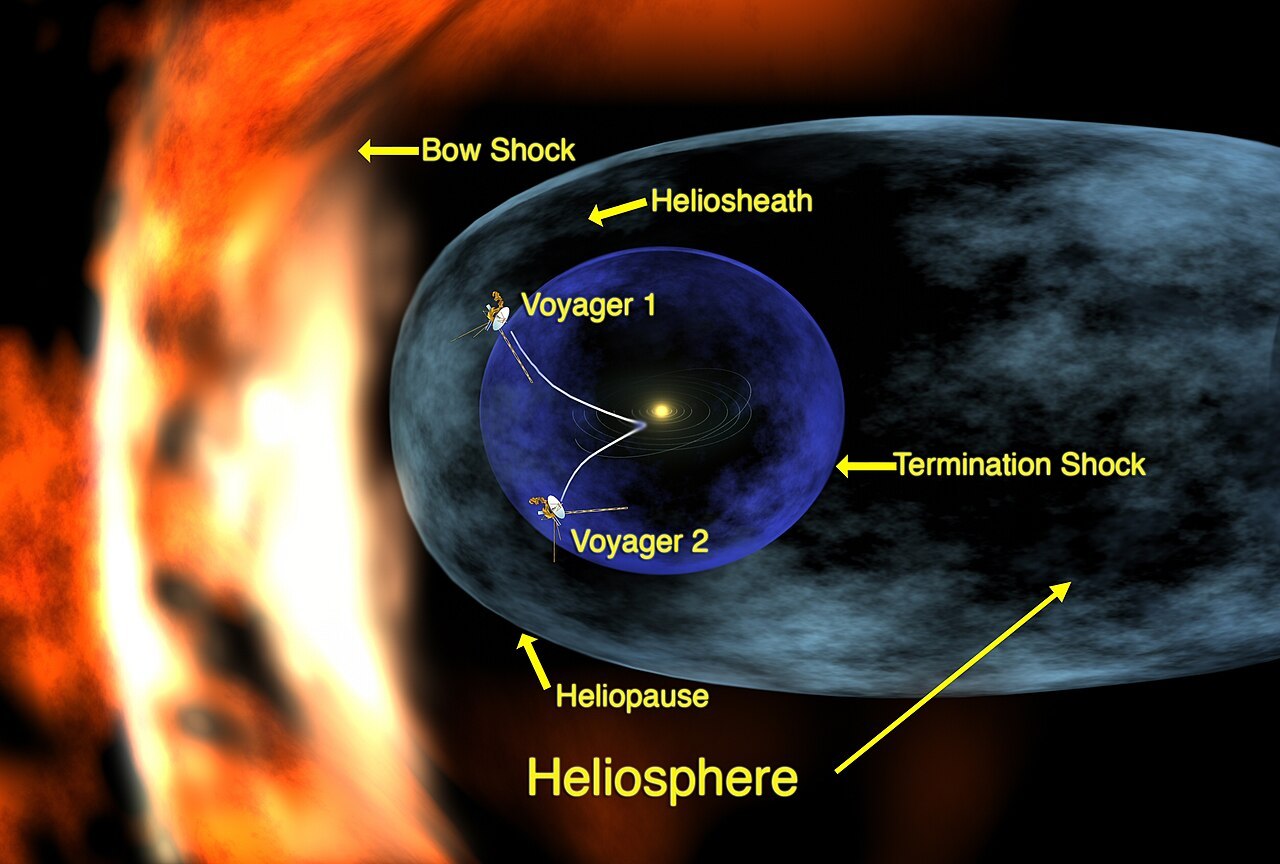
Exactly 49 years ago, on September 5, 1977, the Voyager 1 spacecraft launched from Cape Canaveral. Its primary mission was to explore Jupiter and Saturn, but the mission has long outgrown its original plans.
The probe left the heliosphere—a kind of bubble of charged particles and magnetic fields created by the Sun—and in August 2012 became the first human-made object to enter interstellar space. Currently, Voyager 1 remains the farthest spacecraft from Earth.
Despite its venerable age and vast distance, the probe still transmits scientific data. According to NASA, as of April 2026 it had two scientific instruments operating, and engineers were gradually shutting down the rest to save energy and extend the mission.
Over decades of travel, Voyager 1 has made many discoveries. At Jupiter, it discovered a thin ring and two new moons – Thebe and Metis. At Saturn, the spacecraft found five new moons and the G ring, as well as transmitting unique images of Titan, whose atmosphere is 90% nitrogen.
In February 1998, Voyager 1 overtook Pioneer 10 and became the most distant artificial object. As of August 2024, it was 164.7 astronomical units from Earth and moving at about 17 km/s relative to the Sun.
On board the spacecraft is a golden record with a message to extraterrestrial civilizations: greetings in 55 languages, sounds of Earth, music, and images. It is a kind of time capsule that may one day reach another star system.
Image: Image card

Primary source: science.nasa.gov ↗