
GPT-6 Astra Decrypts an Army Enigma Radio Message That Had Defied Solution Since 2005
XORit Editorial · Sources, AI assistance and corrections
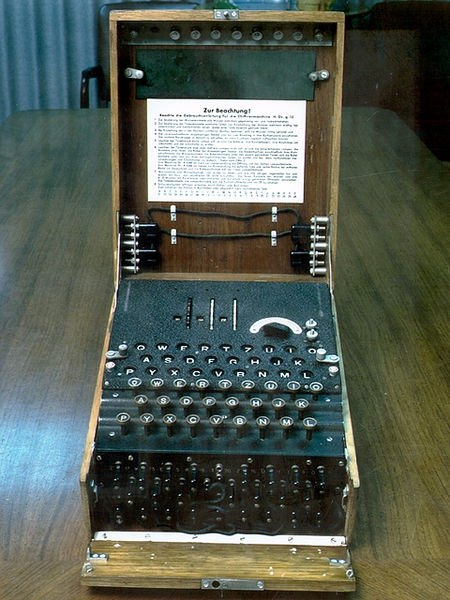
The German army radio message MVUEH, sent on 10 July 1941, has been decrypted by OpenAI's GPT-6 Astra model. The message had been unreadable since 2005. The result was verified by the author of the Crypto Cellar Research page: on 15 September 2026, Carter Leffer contacted him with a request to confirm the decryption.
The message in question was transmitted by a radio station with the tactical call sign 2ny and received by the station of the quartermaster (Ib) of the SS division "Totenkopf": on 10 July 1941 at 17:30 it was entered in the incoming log under number 172. That very message is MVUEH.
The model worked independently. From the unsolved messages on the site it chose Nr. 172 as the most promising, and quickly suspected that its text was connected to the already-decrypted Nr. 173 (SIPVX) of the same day — which Alex Shovkoplyas worked out in 2017. GPT-6 Astra then wrote an Enigma simulator and a bombe in Python and C++, and picked the repeated place name ROSENOW ROSENOW as its lead. The key turned out to be quite unlike those of the other messages from that day — down to the rotor order (253 versus 512).
Earlier attempts were apparently hampered by two things: mistakes in copying the ciphertext from the original form, and a rare turnover of the Enigma's left rotor — in this message it happens at the 72nd letter.
There is no sensation in the text itself: the decryption almost matches message Nr. 173. The difference in length — twelve letters (82 versus 94) — is explained by a typo during encryption of the word Bitte, which became Btte, and by the fact that in SIPVX the sender's signature Waschbusch is repeated. The author of the analysis notes that he is still studying how the model worked, and reminds us that what GPT-6 Astra did in two days would have taken a human researcher weeks or even months.
Image: Wikimedia Commons Public domain

Translation editor: Салтанов А.
Source: www.cryptocellar.org ↗