
Nearly 60 Billion Rubles for Internet Filtering in the Draft Budget
XORit Editorial · Sources, AI assistance and corrections
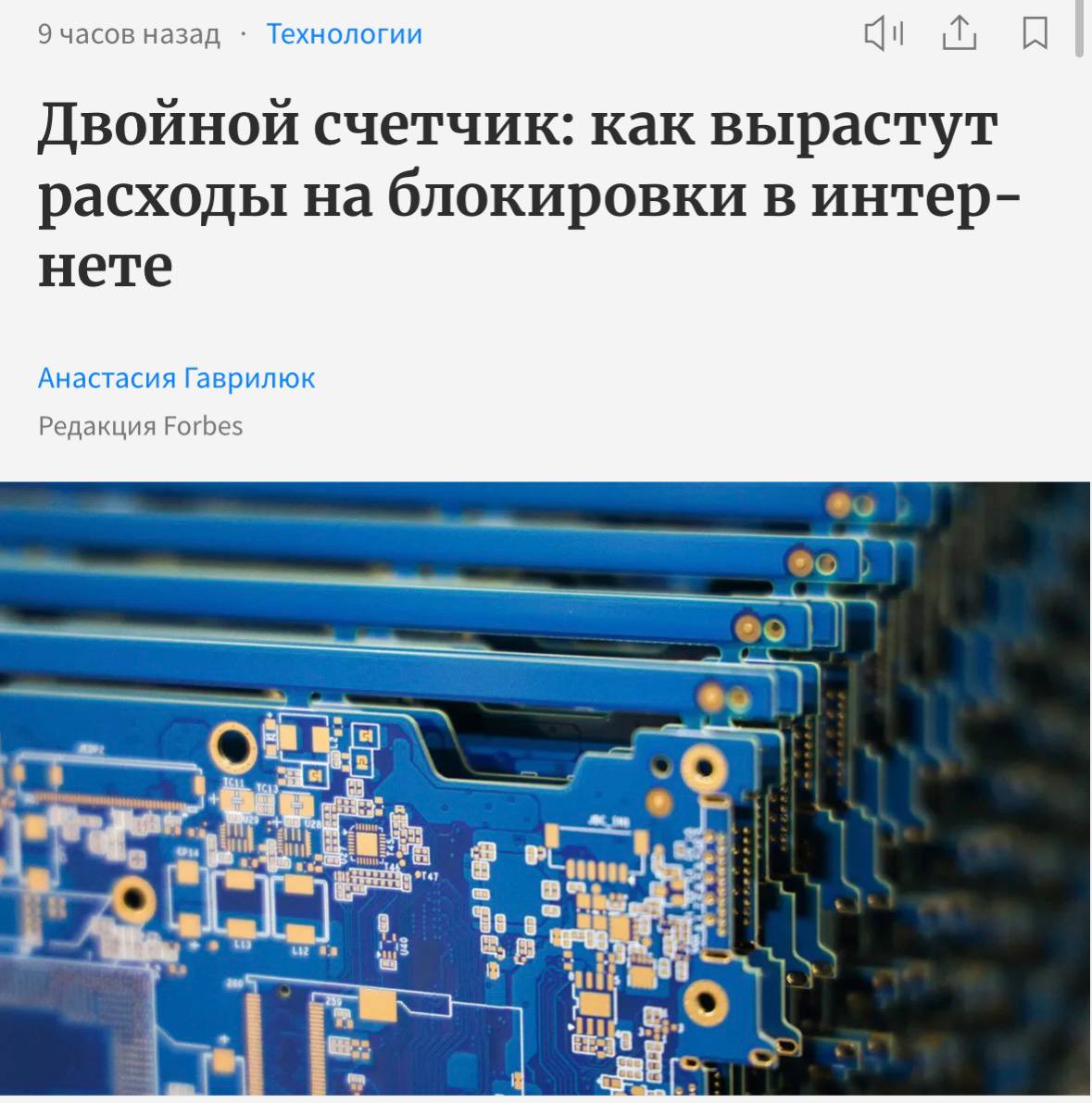
The draft three-year budget for 2027-2029 sets aside almost 60 billion rubles for the operation and modernization of the system that filters and blocks internet resources. Two years ago, when the national project "Data Economy" was being finalized, 32 billion was planned for the same purposes over the same period, and at that time the amounts grew year on year: 7.22 billion in 2027, 12.32 billion each in 2028 and 2029. Now the plan is roughly 20 billion a year.
According to an annex to the draft budget, the Main Radio Frequency Center, which reports to Roskomnadzor, is to receive 19.87 billion rubles in 2027, 19.844 billion in 2028 and 19.87 billion in 2029 for the operation of the Automated System for Ensuring the Security of the Russian Internet Segment (ASBI). ASBI is responsible for traffic filtering, and its key element remains TSPU, technical means of countering threats.
TSPU are installed on telecom operators' networks under the law on the sovereign Runet, which has been in force since November 2019. These devices filter traffic in the Russian internet segment, blocking and throttling individual resources and circumvention tools. In late 2023, Roskomnadzor head Andrei Lipov said the segment was fully equipped with TSPU. Money from the new draft will go, among other things, toward upgrading such devices at operators.
The Ministry of Digital Development is not commenting on the cost increase: it did not respond to Forbes's request, and the Ministry of Finance redirected the query to the Ministry of Digital Development. This is still a draft budget, so the final amounts may change.
Experts attribute the higher cost to sanctions and rising prices for chips and components amid the AI boom. Nikita Tsaplin, CEO of hosting provider RUVDS, cites a doubling in the price of RAM over this year and a threefold rise in prices for SSDs. Leonid Konik, a partner at ComNews Research, notes that TSPU are technically deep packet inspection (DPI) devices and need 64 GB of memory for every 10 Gbps of throughput, while memory chips have risen in price four- to sixfold over the year.
Translation editors: Соловьев В., Пеков А.
Source: www.forbes.ru ↗