
Margaret Hamilton, Who Led Apollo Software Development, Has Died
XORit Editorial · Sources, AI assistance and corrections
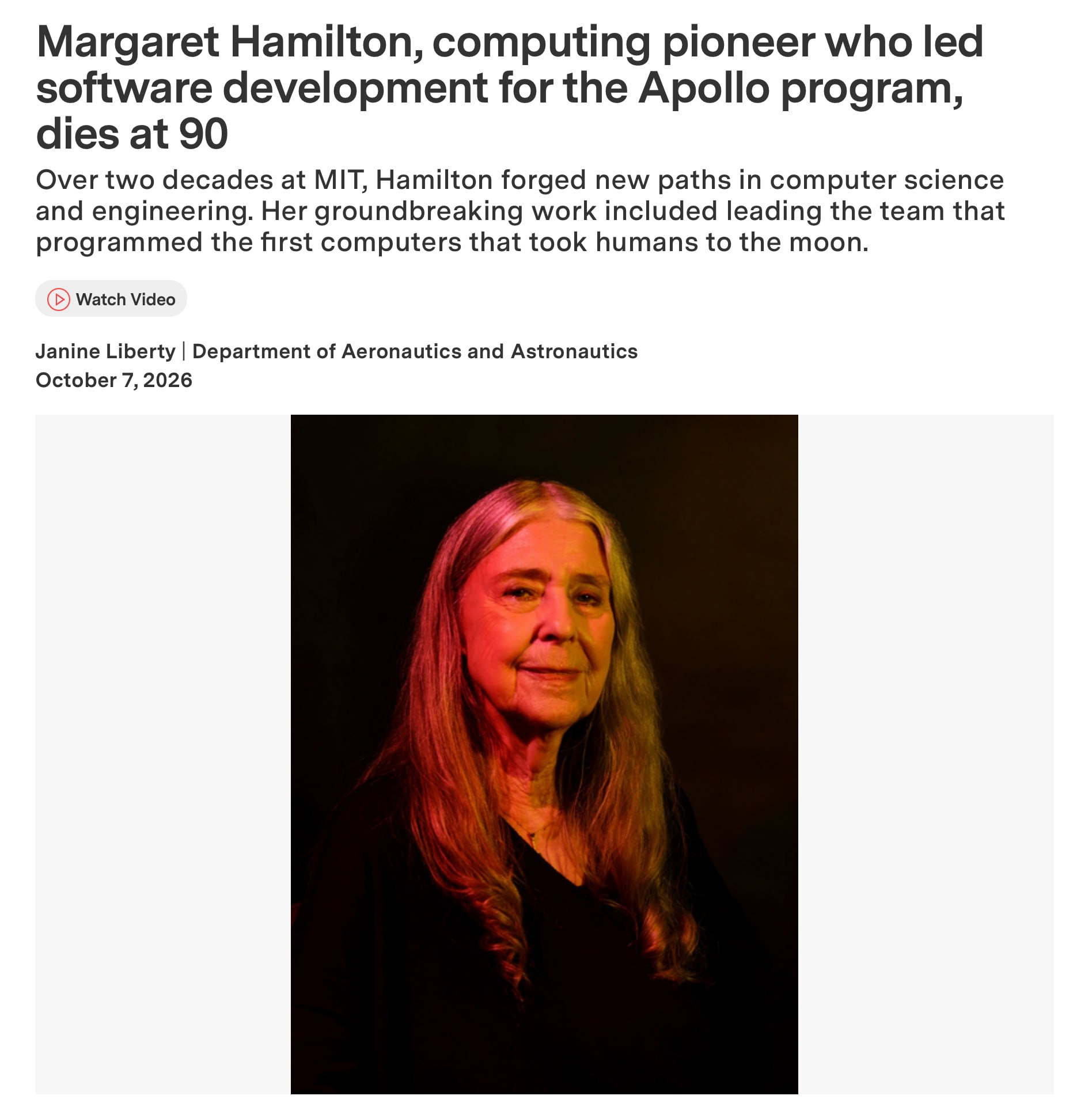
On September 30, 2026, Margaret Hamilton died. She led the development of onboard software for the Apollo program. She was 90 years old. At the Massachusetts Institute of Technology she worked from 1959 until the mid-1970s and helped turn software engineering into a separate discipline.
Hamilton arrived at MIT in 1959 and initially held a temporary position in the meteorology department, where, together with Professor Edward Lorenz, she wrote programs for weather forecasting. That became her entry into programming, and the work later proved useful to Lorenz in his publications on chaos theory. In 1961 she moved to MIT's Lincoln Laboratory and took part in the SAGE project, the first air defense system of the United States.
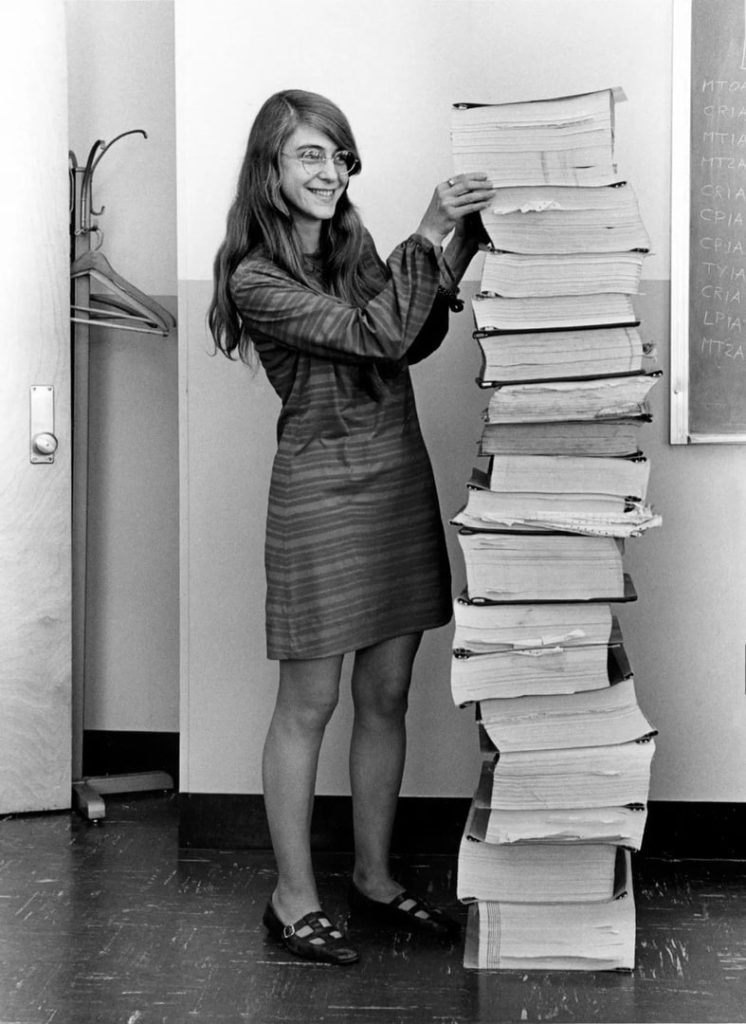
In 1965, MIT's Instrumentation Laboratory, which had received a NASA contract for the Apollo onboard software, was looking for developers for the flight to the Moon. Hamilton was taken on as the project's first programmer and its first woman programmer. She started with software for unmanned missions and then headed the onboard software team for crewed flights; by 1968 more than 400 people were working on the Apollo software, and she herself was a deputy director in charge of the command and service module team. The term software engineering, by her account, at first sounded like a joke.
The best-known episode of her work is connected with the landing of Apollo 11 in July 1969. Minutes before touchdown, the computer issued alarm 1202: the overload had been caused by a failure of a hardware switch. Priority software shut off secondary tasks, and the landing was allowed to continue. A similar failure had earlier been triggered by her four-year-old daughter, who accidentally launched the P01 program on a simulator; during the Apollo 8 flight in 1968, Jim Lovell mistakenly activated the same program and the navigation data was lost. Hamilton's revisions were added to the software only after that, and the approach itself was later called defensive programming.
After Apollo was wound down, the Instrumentation Laboratory separated from MIT and became the Draper Laboratory. In the mid-1970s Hamilton left MIT, in 1976 she founded Higher Order Software, and ten years later Hamilton Technologies, where she developed the USL language and methodology. In 2016 she received the Presidential Medal of Freedom; in 2015 the Apollo code was posted in full on GitHub; and in 2017 she appeared as a minifigure in the Lego Women of NASA set. A farewell will be held in the spring in Cambridge.
Translation editors: Соловьев В., Пеков А.
Source: news.mit.edu ↗