
38 Years of NeXT Computer: Jobs’s Cube, the First Web and Tools for DOOM
XORit Editorial · Sources, AI assistance and corrections
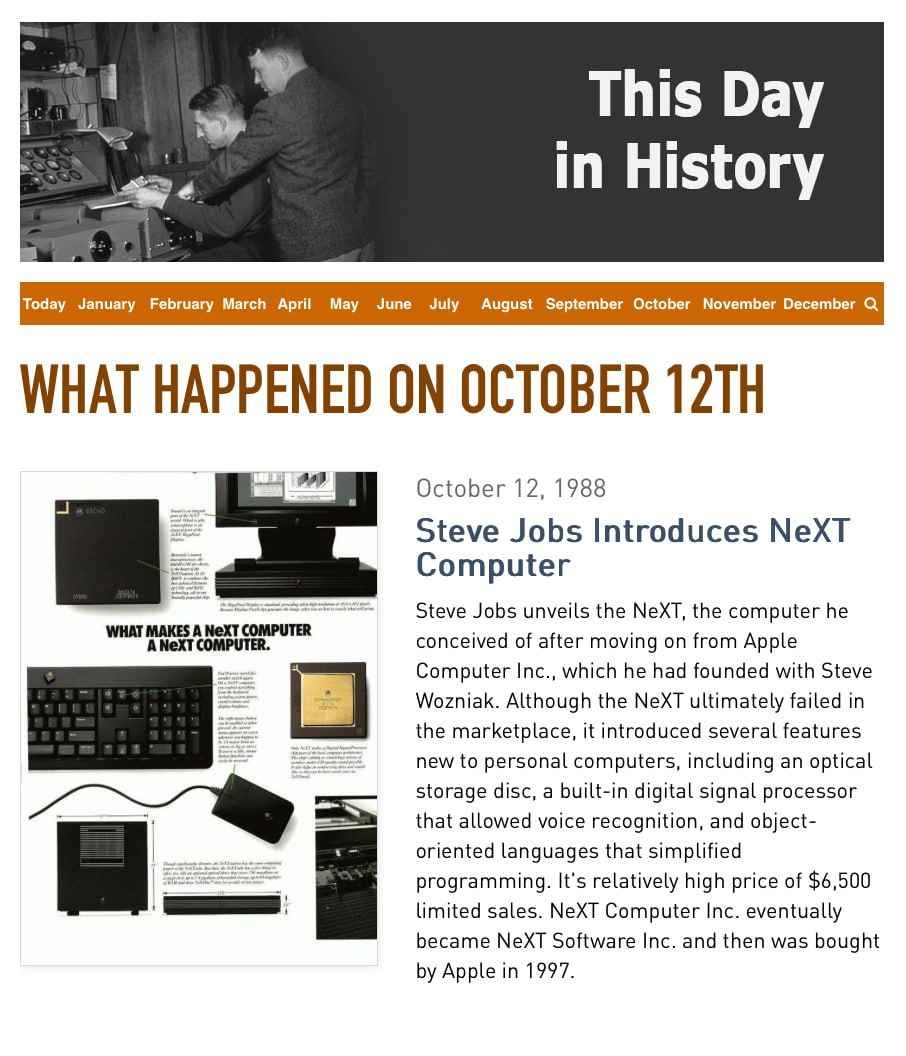
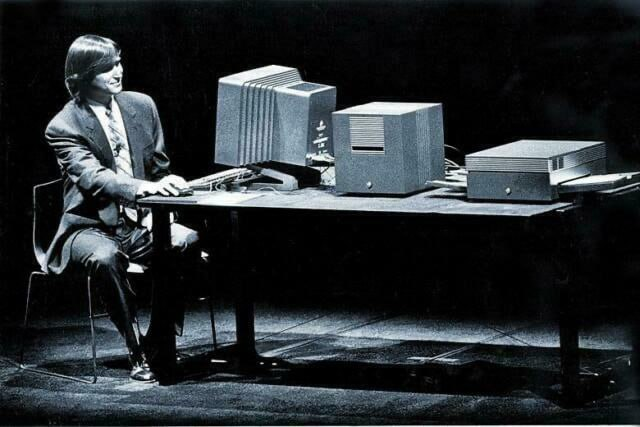
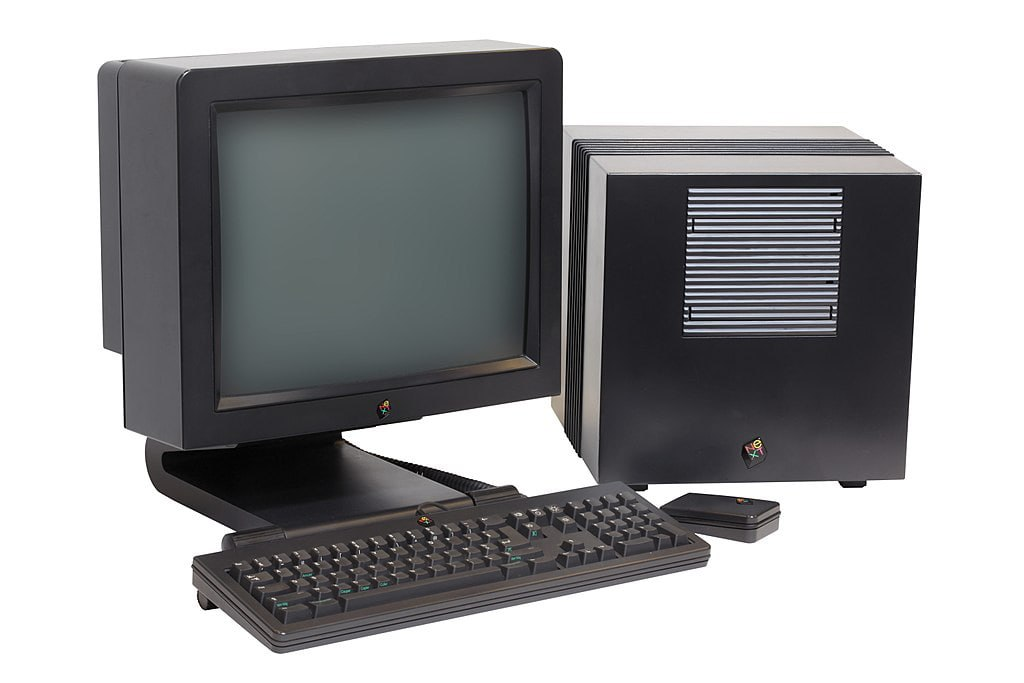
On October 12, 1988, Steve Jobs introduced the NeXT Computer, a black cube-shaped computer. Today this event is 38 years old. The machine was created primarily for universities and research work: along with its own hardware, NeXT offered an operating system and development tools. Later, the first web browser appeared on a computer from this company, and NeXT workstations became an important tool for the id Software team.
The history of NeXT began after Jobs's conflict with Apple's leadership in 1985. In the spring he lost his managerial authority, and in September he left the company and started a new project. Five Apple employees joined him.
What Was Inside the First Cube
The first NeXT Computer received a 32-bit Motorola 68030 processor at 25 MHz. The base configuration had 8 MB of RAM, expandable to 64 MB. The main storage was a 256 MB magneto-optical drive; hard drives of 330 or 660 MB were also available. The computer connected to an Ethernet network and came with a 17-inch monochrome MegaPixel monitor with a resolution of 1120 × 832 pixels.
Besides the central processor, the machine had a separate digital signal processor. The base system was priced at 6500 dollars. It was an expensive workstation for education and professional work, not a mass-market home PC. Its capabilities were impressive, but the high price limited sales.
NeXTSTEP, the Web and Games
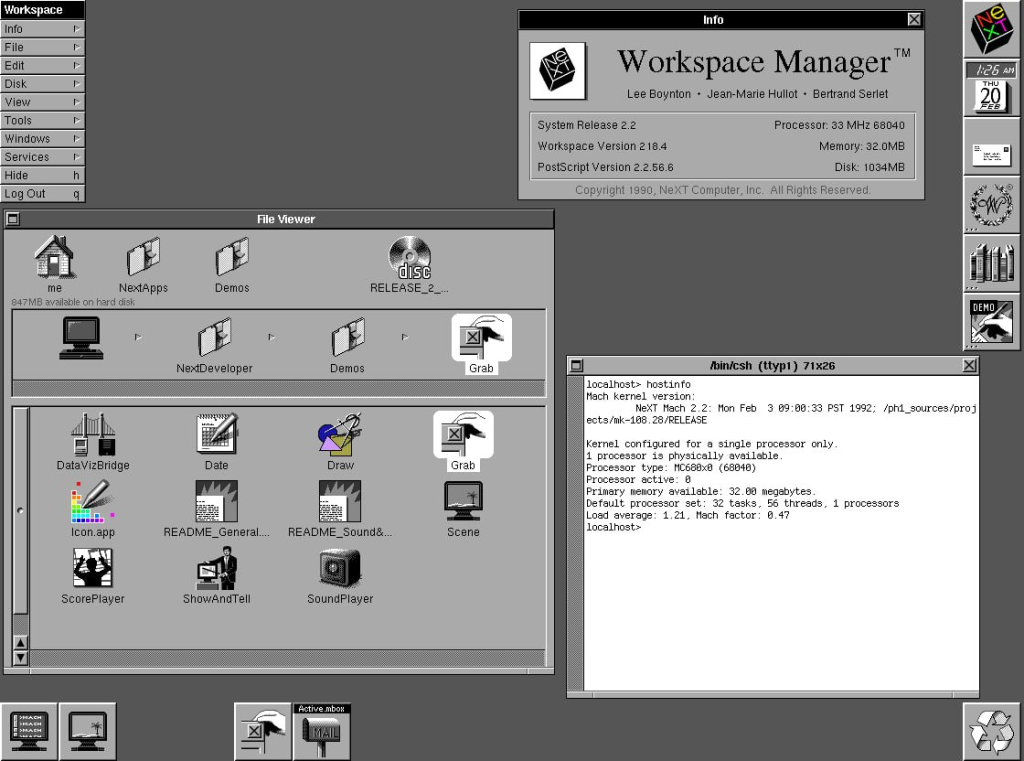
The software part was called NeXTSTEP. It combined the Mach kernel, Unix/BSD components, a graphical environment and object-oriented libraries. Developers used C and Objective-C, and assembled interfaces in Interface Builder. In September 1989 NeXTSTEP 1.0 was released; at the computer's presentation in 1988, a preliminary version of the system was shown.
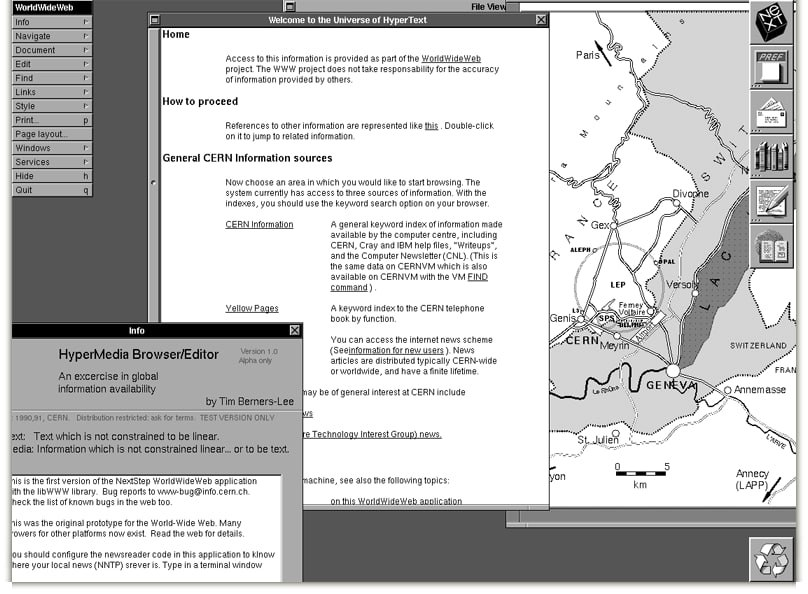
In 1990, at CERN, Tim Berners-Lee wrote the first web browser, WorldWideWeb, on a NeXT; it was also a page editor. The first web server also ran on his computer. By the end of that year, the main components of the web were already working. Berners-Lee himself explained that NeXT's tools made it possible to do in a couple of months what would have taken about a year on another platform: the ready-made environment took on a significant part of the work.
A separate chapter is connected with DOOM. John Carmack and the id Software team used NeXT workstations while developing DOOM and Quake. Carmack recalled that Interface Builder was especially useful for game editors, while pixel graphics continued to be drawn in Deluxe Paint under DOS. There is also a connection with Wolfenstein 3D: Kevin Cloud made game guides on a NeXT, starting with Wolfenstein 3D. But this does not mean that both games were written entirely on the first cube from 1988: Carmack called the color NeXTstation his first NeXT machine.
Turbo and the Return to Apple
The original NeXT Computer and the later NeXTcube share the same recognizable cubic shape but different internals. In 1992 the NeXTcube Turbo version appeared: a Motorola 68040 at 33 MHz and memory expansion up to 128 MB. In an interview in the autumn of 1992, Jobs spoke of roughly 50,000 NeXT computers shipped; this number refers to the company's computers, not only to one cube model.
In 1993, NeXT abandoned computer manufacturing and focused on software. On December 20, 1996, Apple announced its intention to buy NeXT Software for about 400 million dollars. The deal was completed in February 1997.
NeXT's technologies became the foundation of a new generation of Apple's software platform. NeXTSTEP and OPENSTEP left a direct legacy in Mac OS X and Cocoa: object-oriented libraries, Objective-C and interface-building tools found continuation inside Apple. NeXT computers did not become mass-market, but their software environment turned out to be connected both with the birth of the web, and with the development of landmark games, and with the further history of the Mac.
Translation editors: Соловьев В., Пеков А.
Source: www.computerhistory.org ↗