
On this day: Marie Skłodowska-Curie was born
XORit Editorial · Sources, AI assistance and corrections
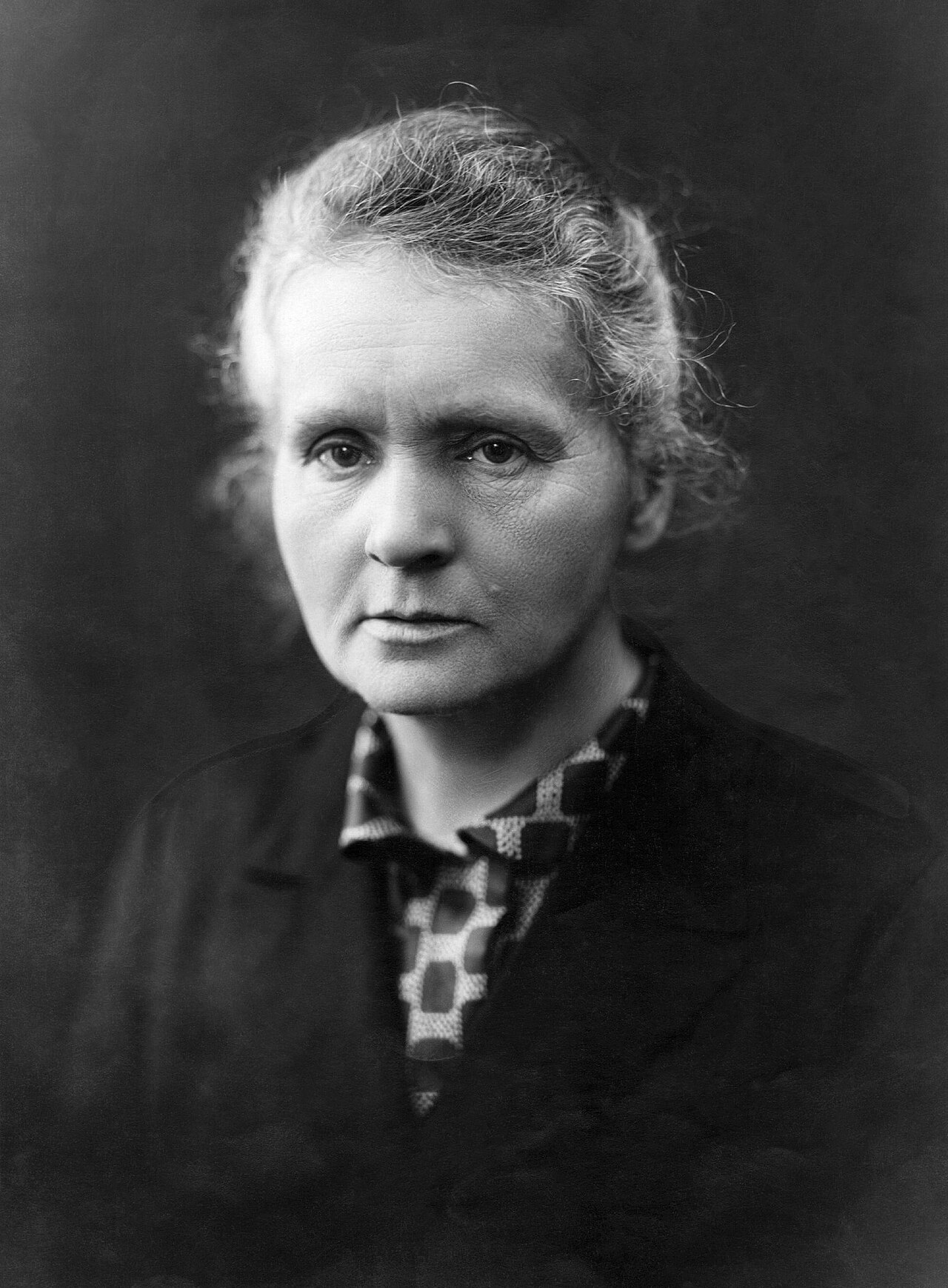
On 7 November 1867, Marie Skłodowska-Curie was born in Warsaw; she was a physicist and chemist who later received Nobel Prizes in two different scientific disciplines. Warsaw was then part of Congress Poland within the Russian Empire. Maria was the fifth and youngest child in the family of teachers Bronisława and Władysław Skłodowski.
Her father taught mathematics and physics. When the Russian authorities removed laboratory classes from Polish schools, he brought some of the equipment home and taught the children to handle it. Maria was barred from entering a regular institution of higher education because she was a woman, and she studied at the secret "Flying University." Her work as a governess was arranged with her sister Bronisława: Maria helped pay for Bronisława's medical studies in Paris in exchange for the same help two years later, while she herself then lacked the means for her own studies in Paris. In 1891 she left for Paris, where she earned a degree in physics in 1893 and a second degree a year later, and in 1895 she married Pierre Curie.
From Warsaw to Paris
Working with uranium rays, Curie concluded that the radiation came not from the interaction of molecules but from the atoms themselves. In 1898 the couple announced the discovery of polonium and radium and introduced the term "radioactivity." To prove the elements existed, they had to isolate them in pure form: from a ton of pitchblende in 1902 they obtained a tenth of a gram of radium chloride. Curie did not patent the radium isolation process, so that other scientists could carry out research too.
In 1903, Marie, Pierre Curie and Henri Becquerel received the Nobel Prize in Physics. Marie became the first woman awarded a Nobel Prize. After Pierre's death in 1906, she took over his chair and became the first woman professor at the University of Paris. In 1911 she was awarded the Nobel Prize in Chemistry for the discovery of radium and polonium and the isolation of radium. She remains the only woman to have received the prize in two different scientific fields.
During the First World War, Curie saw that the wounded were better operated on as quickly as possible, and she organized field X-ray stations. She headed the Red Cross radiology service, installed 20 mobile X-ray machines in the first year of the war and another 200 units in field hospitals, and later trained assistants. An estimated more than a million wounded used her units.
The First World War
Marie Curie died on 4 July 1934 at the Sancellemoz sanatorium in Passy, Haute-Savoie department, of aplastic anemia. The cause is considered to be years of radiation exposure: at the time the harm of ionizing radiation was not yet known, and the work was done without protective measures. In 1995 the remains of Marie and Pierre were moved to the Paris Panthéon; she became the first woman to be honored there for her own merits. Her notebooks are still radioactive: they are kept in lead boxes, and protective clothing is required to work with the papers.
Image: Henri Manuel Public domain

Translation editor: Ловушкин А.
Source: en.wikipedia.org ↗