
A shape-based search found a ‘superdark’ protein that links cells together
XORit Editorial · Sources, AI assistance and corrections
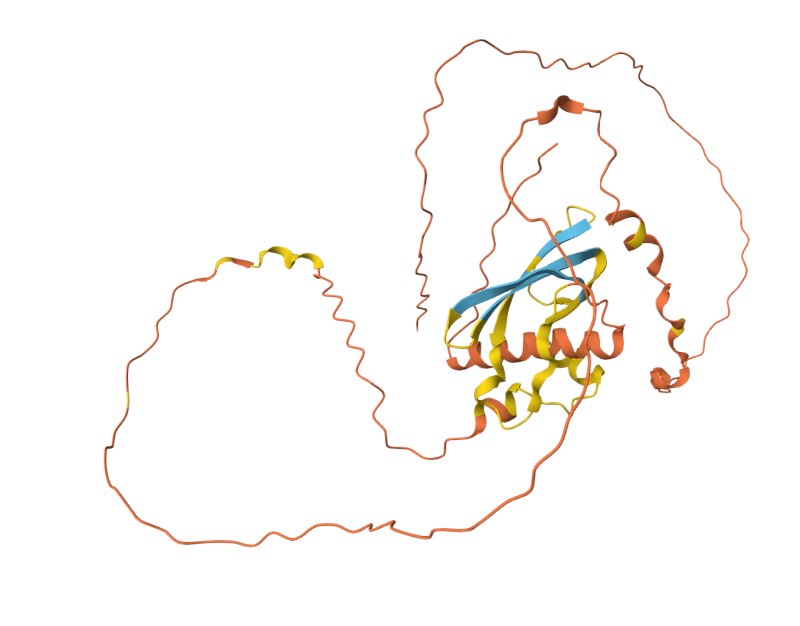
The researchers looked for relatives of known proteins not by sequence but by three-dimensional shape. They compared roughly 214 million predicted AlphaFold2 models against a reference, using rhodopsin — a classic GPCR — as the benchmark, and found two families of human proteins that they themselves called 'superdark': barely studied and with no clear sequence similarity to anything already described. The work was published in Nature on 9 September.
The main focus is TM184C, the most widespread and evolutionarily conserved of the candidates. It behaves atypically: it sits not on the cell surface, as a receptor should, but on internal vesicles. Those run along microtubules, accumulate in protrusions and help build bridges between neighbouring cells, through which the cells exchange organelles; the protein itself meanwhile restrains autophagy. No signs of binding to G proteins were found, but TM184C does recruit β-arrestin and GRK kinases, which phosphorylate it — closer to atypical receptors that work through arrestin. Without its C-terminal tail, the bridges and protrusions stop forming.
The antiquity of the mechanism was tested in yeast: their protein Hfl1 is a relative of TM184C, and without it the work of vacuoles, the analogues of lysosomes, is disrupted. The human TM184C corrected this defect, while its relatives TM184A and TM184B did not: the protein's structure and function are very ancient. The point of the work is broader than one protein — a shape-based search pulls out of the 'dark' part of the proteome what sequence alone would never have found. For now this concerns laboratory observations and predicted structures.
Image: Luyu9927 CC BY 4.0 · License

Translation editor: Ловушкин А.
Source: www.nature.com ↗