
Merck and Moderna: mRNA therapy intismeran clears phase three in melanoma
XORit Editorial · Sources, AI assistance and corrections
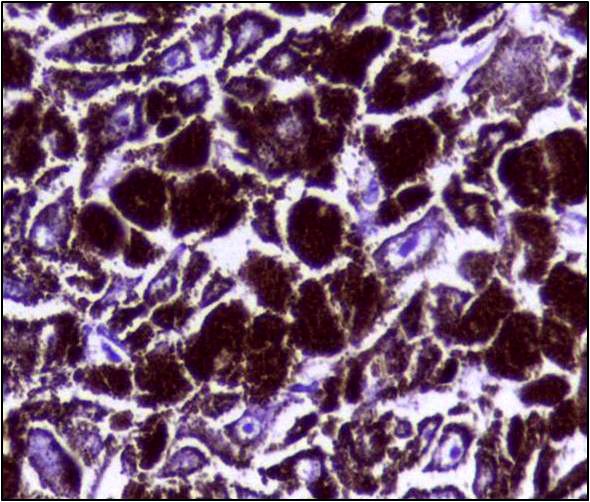
Merck and Moderna announced positive results from the phase three INTerpath-001 trial: the combination of intismeran autogene (V940, mRNA-4157) and pembrolizumab (KEYTRUDA) showed a benefit in patients whose stage IIB–IV melanoma had been completely resected. The therapy is given adjuvantly — after surgery, when no visible tumors remain but the risk of the disease returning is still high.
Intismeran is an individualized mRNA therapy. A tumor sample is taken from each patient, its unique set of mutations is identified, and that "fingerprint" is used to build a drug encoding up to 34 neoantigens. The point is to teach the immune system to recognize cancer cells by the proteins characteristic of them.
The trial enrolled 1,137 people. After complete surgical removal of the tumor, they were assigned in a 2:1 ratio — to the combination with pembrolizumab or to pembrolizumab alone. In an interim analysis, the combination produced a statistically significant and clinically meaningful improvement in recurrence-free survival (the primary endpoint) and in time to distant metastasis (a key secondary endpoint).
The companies stress that this is the first positive phase three result both for an individualized neoantigen therapy and for an mRNA cancer drug. It is also the first phase three trial to show a clinically meaningful advantage in the adjuvant setting in resected melanoma over pembrolizumab alone — the standard of immunotherapy. The combination's safety profile was unchanged, with no new signals reported.
The trial continues: overall survival and other secondary measures have yet to be assessed. The data are to be presented at an international medical congress, and the documents for regulators are being prepared for submission.
There are also earlier reference points. In the phase two KEYNOTE-942 trial, the combination cut the risk of recurrence or death by 49%, and the risk of distant metastasis or death by 59%, compared with pembrolizumab alone; the five-year follow-up was presented at ASCO in 2026. The INTerpath program now includes nine phase two and phase three trials across several tumor types — besides melanoma, non-small cell lung cancer, bladder cancer and renal cell carcinoma.
An important caveat: this concerns preliminary phase three results from an interim analysis. Overall survival has not yet been assessed, and there is still no independent publication of the results — so it is too early to talk about a new standard of cancer treatment before regulators decide.
Image: Department of Pathology, Calicut Medical College CC BY-SA 4.0 · License

Translation editor: Ловушкин А.
Source: www.biospace.com ↗