
On This Day: Léon Foucault and the Pendulum That Showed the Earth’s Rotation
XORit Editorial · Sources, AI assistance and corrections
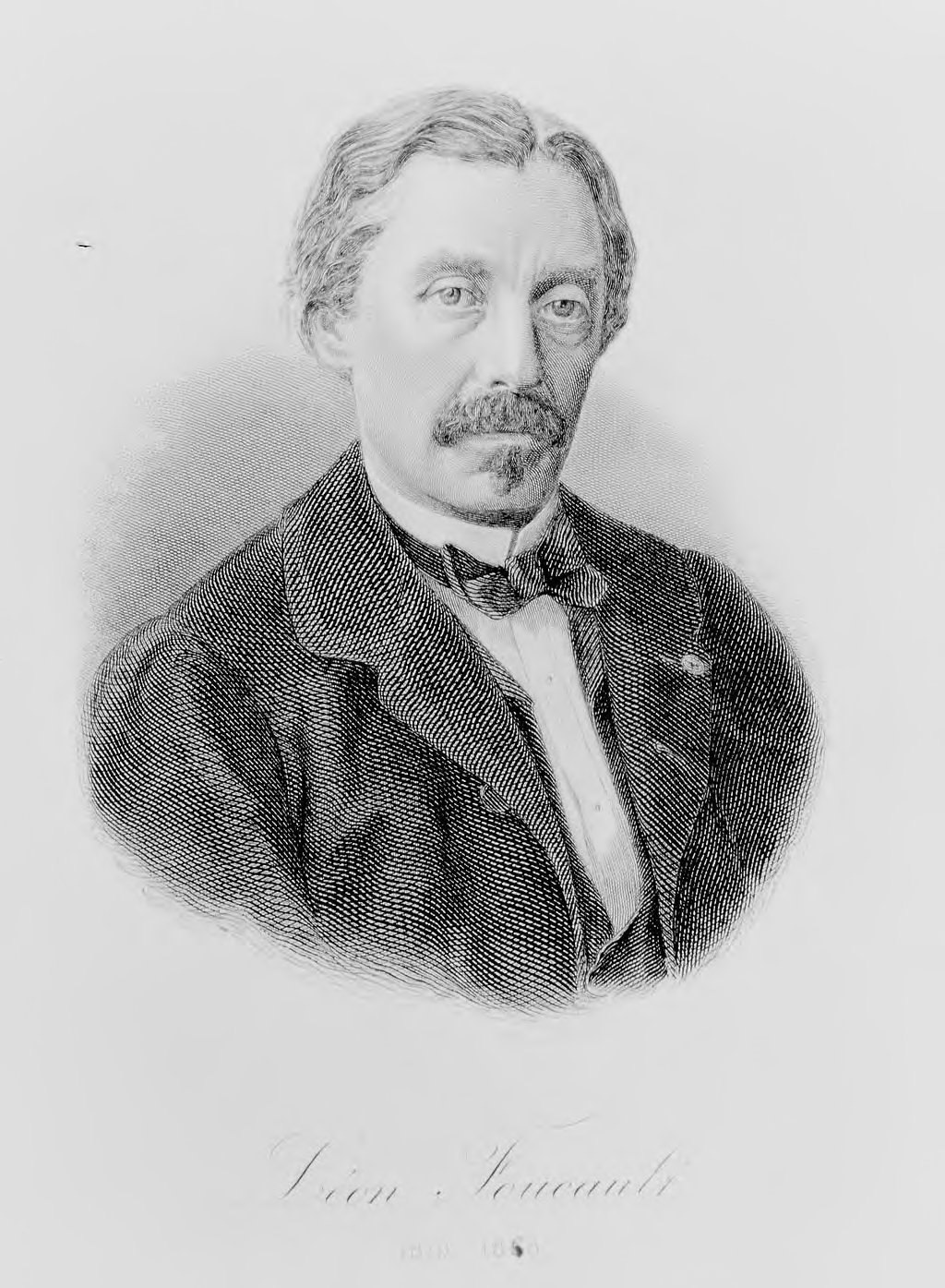
Jean Bernard Léon Foucault was born in Paris on 18 September 1819, a French physicist whose name is borne by the pendulum, eddy currents and the gyroscope. The son of a publisher, he was mostly educated at home and did not start out in physics at all.
Foucault left medicine behind because of a fear of blood and switched to physics — a good call. His first work involved improving Daguerre's photographic process.
Foucault carried out his main experiment in 1851. Under the dome of the Paris Panthéon he suspended a long, heavy pendulum, and the plane of its swing slowly rotated. In this way the rotation of the Earth on its axis became visible to the eye for the first time. The experiment caused a sensation in both the scientific and the ordinary world: "Foucault pendulums" were hung in major cities of Europe and America, and they drew crowds.
A year earlier, in 1850, Foucault used a rotating mirror to measure the speed of light and showed that light travels more slowly in water than in air. For Newton's corpuscular theory of light, this was, as people said at the time, the last nail in the coffin.
In 1852 he used and named the gyroscope — a simpler demonstration of the same rotation. In 1855 he discovered the eddy currents named after him: a copper disc rotating between the poles of a magnet required more effort and heated up in the process. That same year Foucault received the Copley Medal.
Later came a polarizer bearing his name and a method for checking the shape of telescope mirrors. In 1862, with Wheatstone's mirror, Foucault determined the speed of light to be 298,000 km/s — only 0.6% away from the modern value. Asteroid 5668 Foucault is named after him, and Foucault's name is among the 72 names on the Eiffel Tower. He died on 11 February 1868 in Paris and is buried in Montmartre Cemetery.
Image: Unknown author Unknown author Public domain

Translation editor: Ловушкин А.
Source: en.wikipedia.org ↗