
In 2008, the Large Hadron Collider first circulated a proton beam
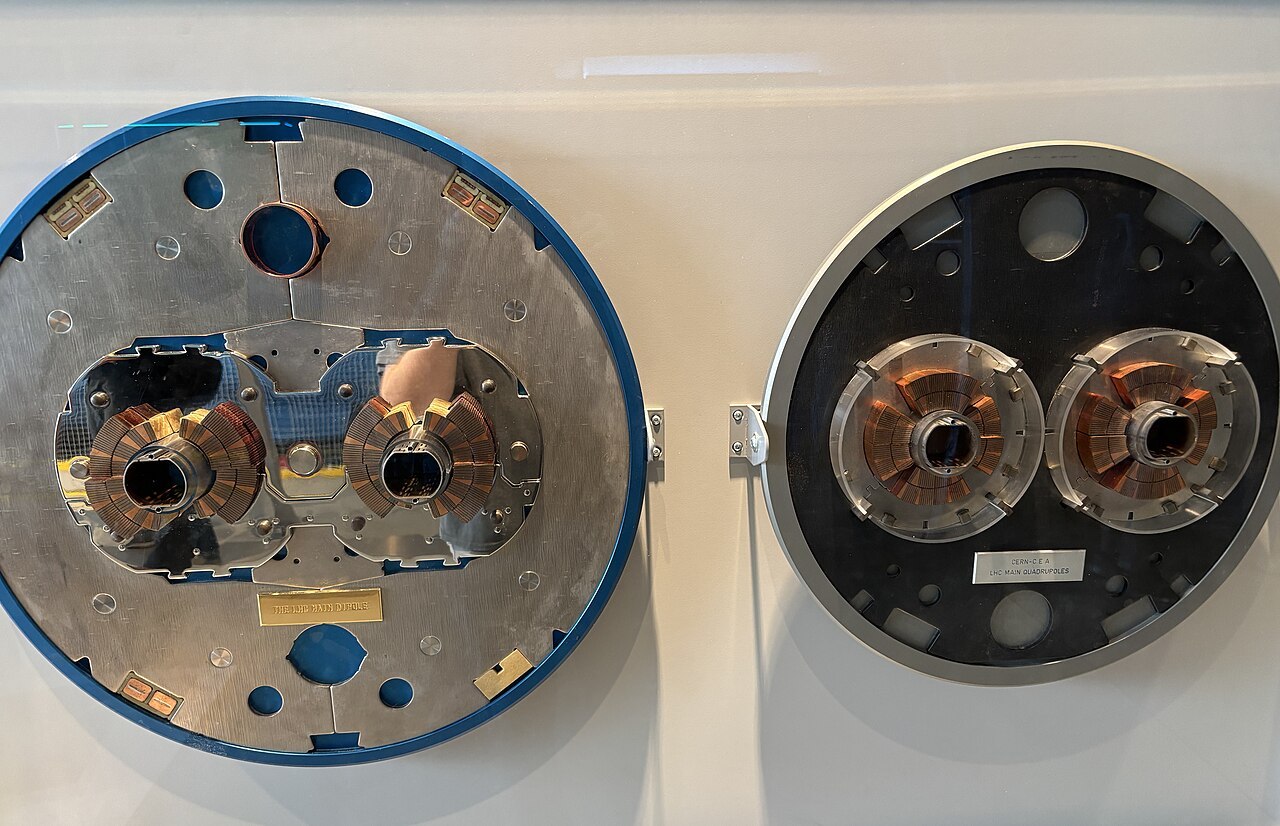
On the morning of September 10, 2008, at the European Organization for Nuclear Research (CERN) near Geneva, a proton beam was first sent around the 27-kilometer ring of the Large Hadron Collider (LHC). At 10:28 local time, engineers directed particles into the tunnel on the border between France and Switzerland, and in less than an hour the beam completed its first full circuit.
The LHC became the largest and most powerful particle accelerator in history. It was built to test predictions of particle physics, search for new particles and study fundamental questions of the structure of matter. Protons were accelerated to almost the speed of light — their speed differed from light speed by only a few meters per second. The collider tunnel lies at a depth of up to 175 meters, and thousands of superconducting magnets operate in the ring, cooled by liquid helium to a temperature lower than in outer space.
The first launch was successful, but just nine days later, on September 19, 2008, an accident occurred: an electrical discharge damaged the superconducting magnets, causing about six tonnes of liquid helium to leak into the tunnel. Repairs took over a year — the collider resumed operation only in November 2009. This breakdown became one of the most serious delays in LHC history but did not prevent subsequent discoveries.
The first particle collisions at a record energy of 7 TeV took place on March 30, 2010. And already on July 4, 2012, CERN announced the discovery of a new particle whose properties matched the predicted Higgs boson. This discovery completed the Standard Model of particle physics and brought François Englert and Peter Higgs the Nobel Prize.
Since then, the LHC has been shut down several times for upgrades. In 2015, the collision energy increased to 13 TeV, and in 2022 — to 13.6 TeV. The facility continues to operate, and the third data-taking run is currently underway, which will last until 2026. After that, the collider awaits a major upgrade to increase luminosity.
For physicists, the launch of the first beam was not just a technical success but the beginning of a new era in the study of the microcosm. It was the LHC that made it possible to experimentally test theories that had remained only on paper for decades, and it remains the main tool in the search for phenomena beyond the Standard Model.
Image: Image card · License

Primary source: en.wikipedia.org ↗