
On this day: first public demonstration of remote computing
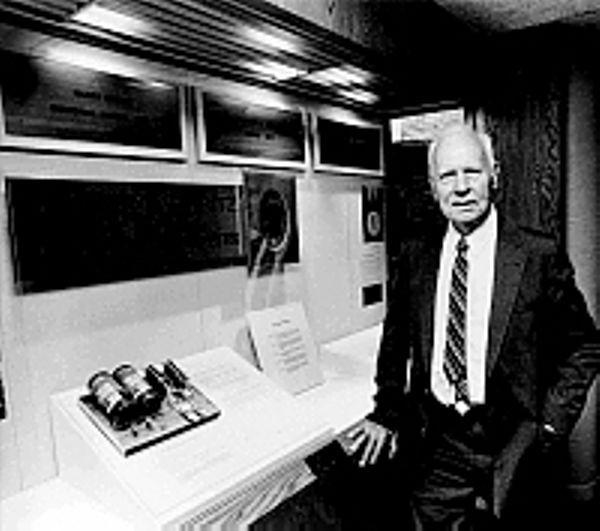
On September 11, 1940, at a meeting of the American Mathematical Society at Dartmouth College, an event occurred that would later be called the first public demonstration of remote computing. Bell Laboratories researcher George Stibitz set up a terminal in the hall connected by telephone lines to a computing machine located in New York. Conference participants could send tasks and receive answers without leaving the room.
In New York at that time, the “Complex Number Calculator” was in operation—a specialized device created under Stibitz’s leadership for operations with complex numbers. The machine accepted requests over the phone and returned results, which was unusual for that time: typically, the computer and user were in close proximity.
According to the Computer History Museum, two days before the public demonstration, on September 9, Stibitz conducted a test connection. In memory of this, a plaque is installed in front of McNutt Hall at Dartmouth College.
This demonstration vividly illustrated a principle that decades later became the foundation of remote terminals: a terminal in one place, a computer hundreds of kilometers away, and just a communication line between them. In 1940, this approach seemed exotic, but it foreshadowed the era of distributed computing.
While working at Bell Labs, Stibitz already had experience building electromechanical calculators. His Complex Number Calculator was built using telephone relays and performed operations with complex numbers, which was important for calculations in electrical engineering. The demonstration at Dartmouth was the first time such a machine was used remotely in front of a large audience of scientists.
The 1940 event did not gain widespread attention outside the academic community, but today it is considered a significant milestone in computing history. It demonstrated that computing could be separated from the user’s physical location — an idea essential to modern networks, cloud services, and remote work.
Primary source: www.computerhistory.org ↗