
Windows Me: 26 years of Microsoft’s most controversial version
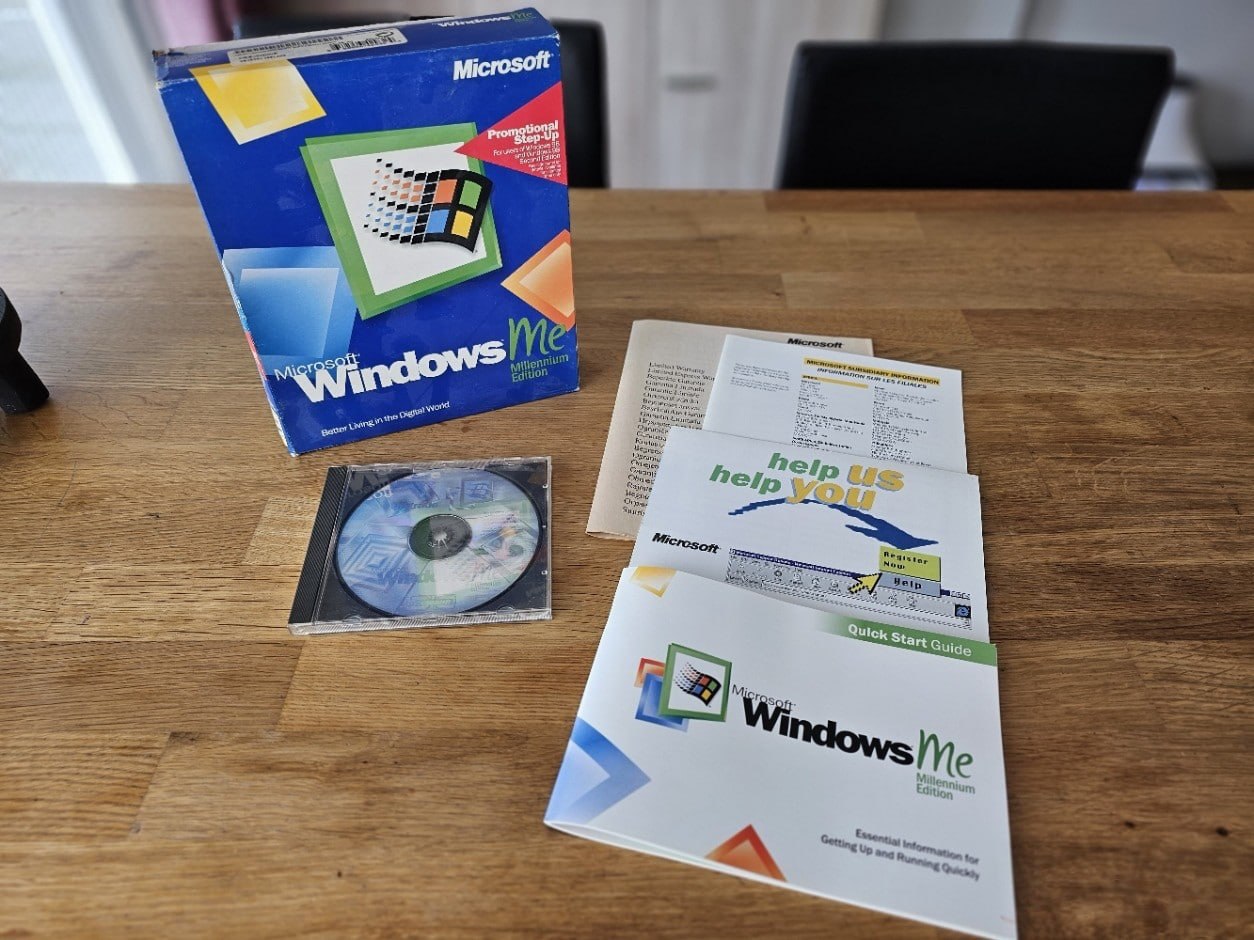
26 years ago, on September 14, 2000, Microsoft introduced the retail version of Windows Millennium Edition. The operating system with a grand name honoring the new millennium was intended to be a bridge between the home Windows 9x line and future NT-based versions, but instead went down in history as one of the company’s most problematic products.
Windows Me introduced several innovations that later became standard: System Restore for rolling back to previous points, automatic updates via Windows Update, an updated Windows Media Player 7.0, and Windows Movie Maker for basic video editing. Users also received Internet Explorer 5.5 and faster boot times compared to Windows 98 SE—an average of 54 seconds versus 86, according to tests of that era.
At the same time, the system retained the outdated Windows 9x architecture with a monolithic kernel. In the standard configuration, real-mode MS-DOS was blocked, which caused problems with running old DOS programs and games. Although disabling the mode sped up booting, it removed compatibility that was still in demand in the early 2000s.
Soon after its release, Windows Me faced a wave of criticism. Users complained about frequent freezes, “blue screens of death,” and crashes. PC World magazine even deciphered the abbreviation ME as “Mistake Edition.” In 2006, the same publication ranked the system fourth in the list of worst tech products of all time.
Some problems were related to the recovery function: it sometimes returned already deleted viruses, and an error in time determination after September 8, 2001, prevented finding restore points. Microsoft later released fixes, but the system’s reputation was already undermined.
The lifecycle of Windows Me was short. Mainstream support ended on December 31, 2003, and extended support on July 11, 2006, simultaneously with Windows 98. Already in October 2001, Windows XP, based on the more stable Windows NT kernel, replaced it. Despite its failure, Windows Me left a mark: many of its features were carried over to XP and later versions of Windows.
Primary source: ru.wikipedia.org ↗