
OpenAI published 722 mathematical manuscripts from its internal model on GitHub
XORit Editorial · Sources, AI assistance and corrections
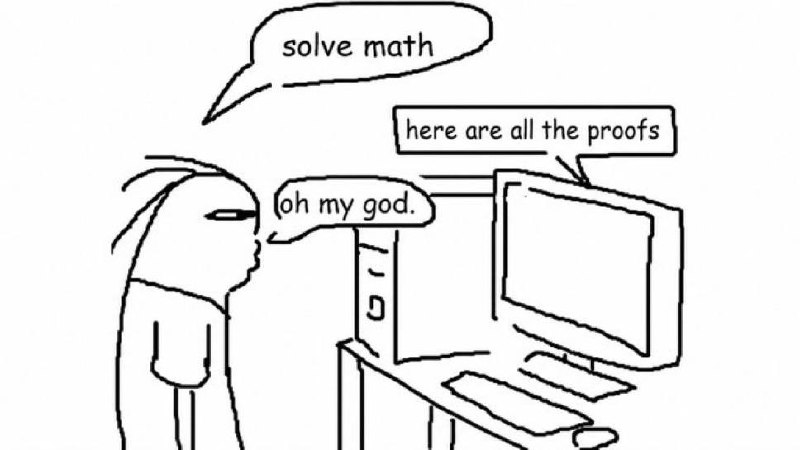
OpenAI has published on GitHub a collection of mathematical manuscripts prepared by its internal model, which has not yet been released publicly. The openai/math repository is open under the Apache-2.0 license: alongside the papers it contains formal proofs, drafts, a manuscript map, and an overview document.
What's in the collection
The catalog currently holds 722 manuscripts grouped into 372 families. A family brings together related works: the main result, supporting arguments, corollaries, or alternative proofs. Each family is assigned to a specific mathematical discipline, and a manuscript map helps readers navigate the individual papers and their supporting materials.
Separately, the company published condensed descriptions of the model's reasoning. They cover ten results, including, for example, the irrationality measure of π, the symmetric and general Mahler conjectures, the Mézard–Parisi formula for sparse spin glasses, and the isomorphism of free group factors.
Not all manuscripts are at the same level of verification. Many proofs are formalized in Lean, in which case a computer can check them, but some works have no formalization yet. In the non-formalized results, OpenAI warns, errors are possible; the company promises to fix them quickly and to add new formalizations to the repository.
How the results were obtained
Almost all results were obtained in the same way: tasks were given to an unreleased internal model. Each result took on average about three hours of computation for ChatGPT Pro-level reasoning. In total, the model was given around 4,000 tasks, and the outputs were then consolidated into families and manuscripts while maintaining the required level of significance.
Two works stand out from the general pattern: a study of the zero-free region of the Riemann zeta function and a proof of the Hodge conjecture for abelian varieties of CM type. The text about the zero-free region for Re(s) > 11/12 was additionally edited by a human for readability.
OpenAI intends to preserve the publication history: corrections and edits will be released as new versions, while previous versions will remain available. To cite an individual manuscript, its folder contains a BibTeX block. The company is also exploring the possibility of hosting these materials in repositories maintained by the community.
Translation editor: Салтанов А.
Source: github.com ↗